
“A Quiet Place: Day One” is the type of restrained, slower cinema and drama that I find lovely to watch, even if I’m not into thrillers/horror films, because of all its layers and beautiful themes. It reminded me of when I was an earthquake relief volunteer in Nepal, and resonated with me as a poet and third culture kid (TCK). I’m glad I saw the second half of it alone because I felt free to cry and cry 😂
When my family saw its trailer last year, I really wanted to see it because I love the ‘A Quiet Place’ franchise (I’ve been curious to learn more about the sci-fi lore), and Lupita Nyong’o (loved her since Queen of Katwe), but we didn’t get to catch it in the cinema (the showings were all in Russian already when I remembered to check them). The other day, I finally watched it because of Joseph Quinn, who plays the supporting character – he also plays Johnny Storm in Fantastic Four: First Steps 🤣 And man, was I demolished 😭💔
I’ll give a brief recap of the story. Although, it’s hard to summarize it for someone who hasn’t seen it yet because I want you to discover parts of the story as you watch it, because the story is written in such a way that the beauty comes out of plot points slowly being unveiled (just like a Jeff Nichols movie – very bare in exposition. As a viewer, you’re treated as a detective, which is fun.) But if you don’t mind that, here’s my summary:
The film is about Sam (Lupita Nyong’o), who is in hospice care outside New York City. Her nurse, Reuben (Alex Wolff), takes her and her group out for a theatre show in the city. Sam, while toting her cat, Frodo (YES, an LOTR REFERENCE!!), says she wants to get pizza there. The aliens crash-land as they are leaving, wrecking the whole city, killing anyone who makes a sound. But Sam is still intent on getting her pizza, so she goes on. Along the way, she reluctantly accepts the company of a fellow survivor, Eric (Joseph Quinn), and they trudge through the city together, unsure whether they will still stay alive.
Now, I’ll be heading to spoiler territory. If you don’t want to go forward, stop reading now (come back later after you’ve seen the movie XD). Or if you’re like my mom and don’t mind spoilers, go ahead.
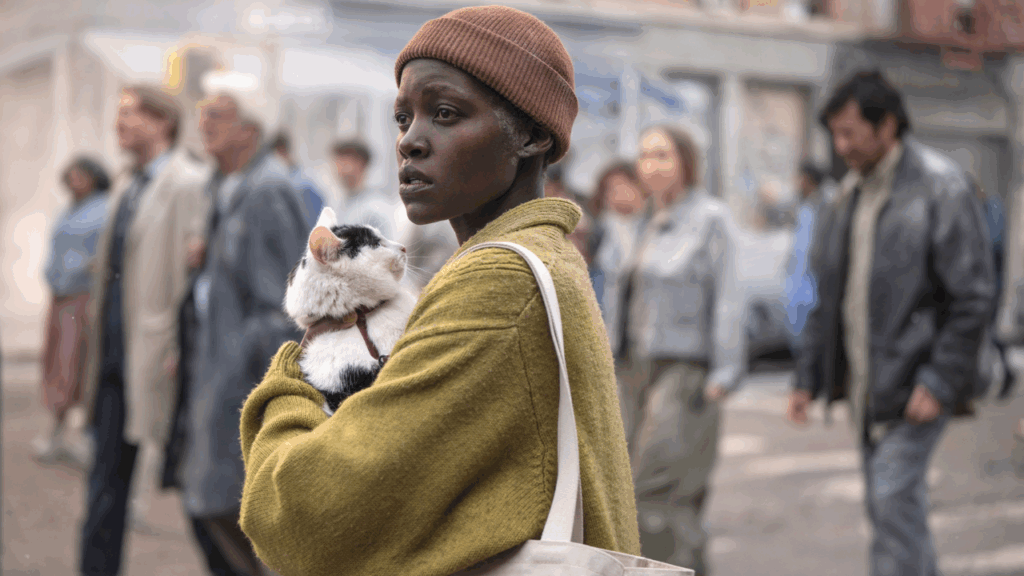
I’ll be sharing my notes according to the chronology of the film. Firstly, Sam is taken care of by a nurse at a hospice, which reminded me of my aunt – she’s a hospice nurse in San Francisco – and my best friend, who is a nurse in the Philippines. So this felt very close to home, deepening the fact that the nurse’s group were all terminally ill. (I didn’t know that a hospice was a place to take care of those people until my aunt and dad explained to me.)
Side note: It also interested me to see a white guy play a nurse lol because a lot of nurses in the US are Filipinos. When I told my dad we should watch this movie, he said “Kung di Pinoy yang nurse, di ako manunood” (“If the nurse isn’t Filipino, I won’t watch) 😂 imma convince him tho…
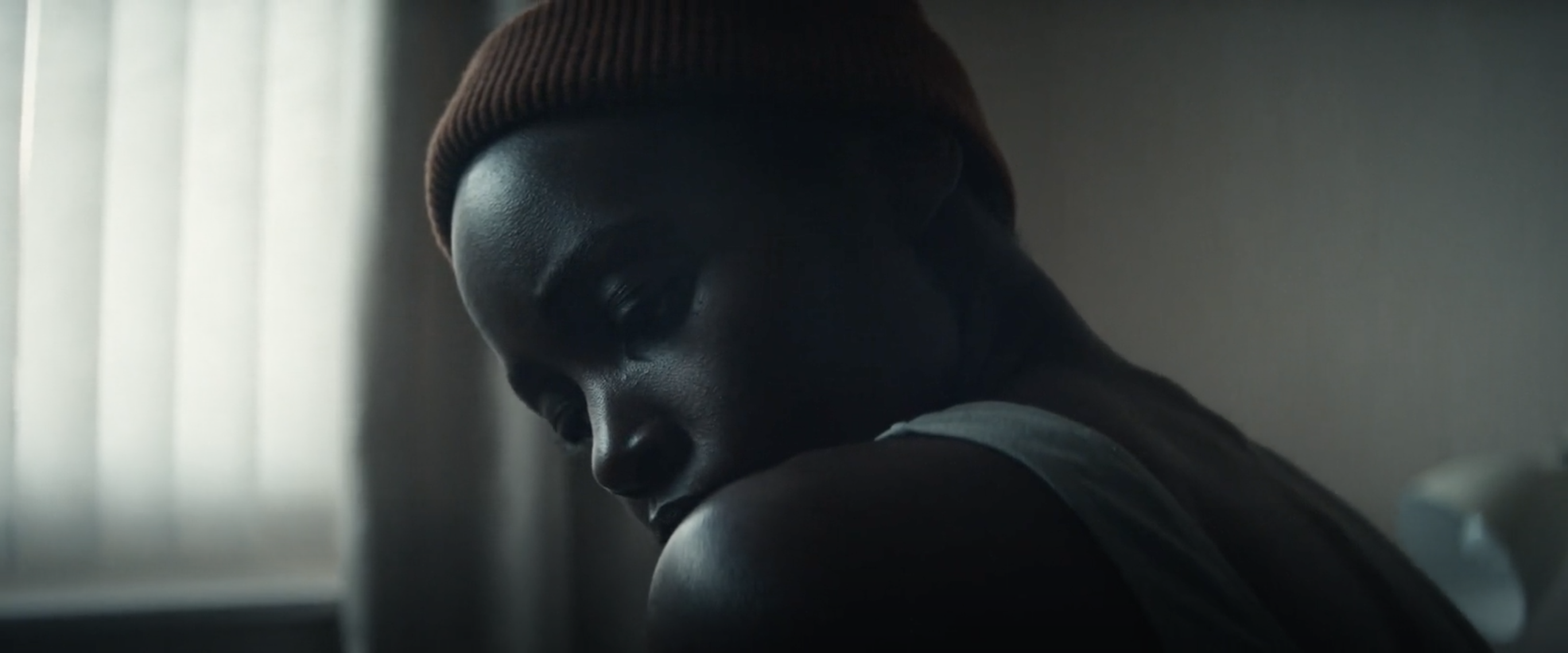
So, learning that Sam was dying – when she didn’t follow the crowd going to the harbor to ride the rescue boats, I thought, “Maybe she doesn’t want to take up space there because she’s going to die anyway, very soon.” And that’s a really heartbreaking decision to make.
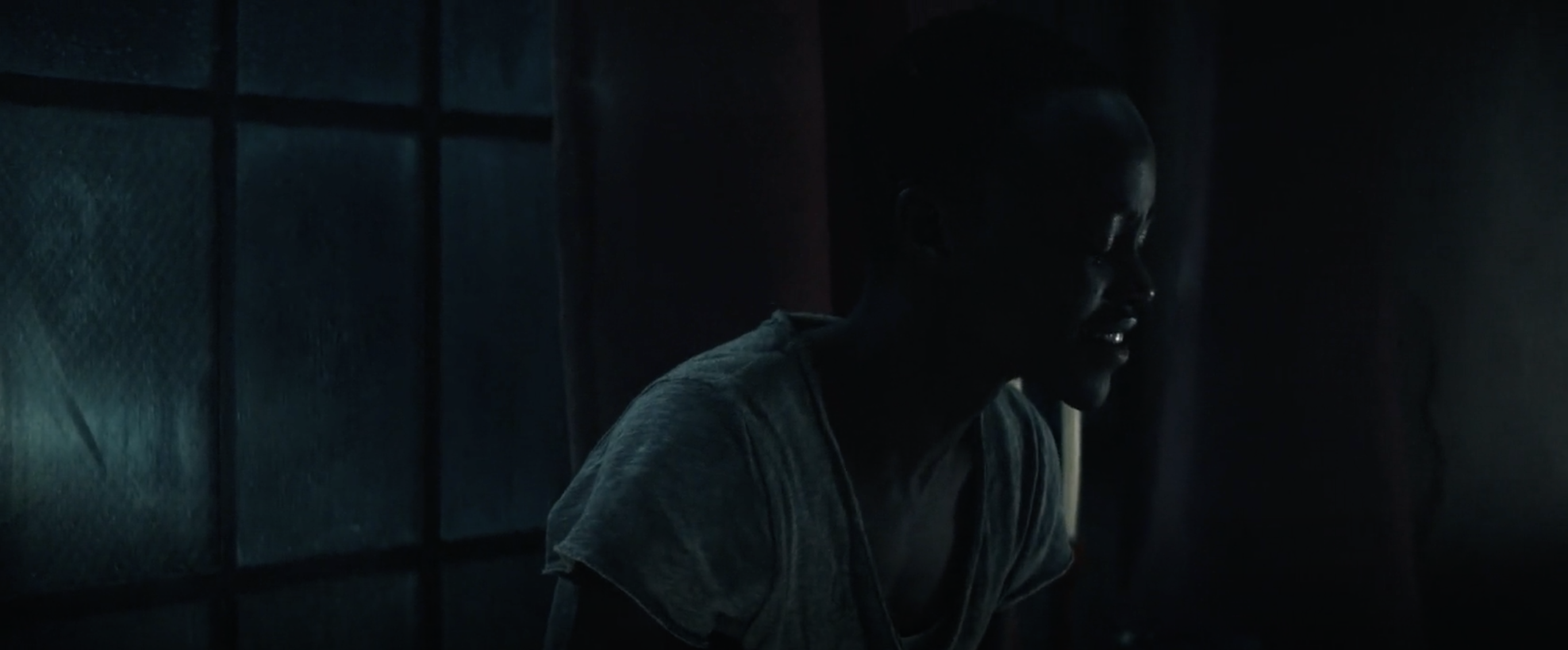
The scene of her in her dark hospice room was reminiscent of the film “Causeway”, where Jennifer Lawrence plays a wounded veteran who has to adjust to a life of weakness back home in Florida. (And I loved seeing Lupita as a Black, woman main character – which you don’t see much in big movies. The cinematography of her in this scene made me gasp, like, wow, she is so beautiful; I wish we were exposed more to this kind of beauty – also speaking as a fellow POC.)
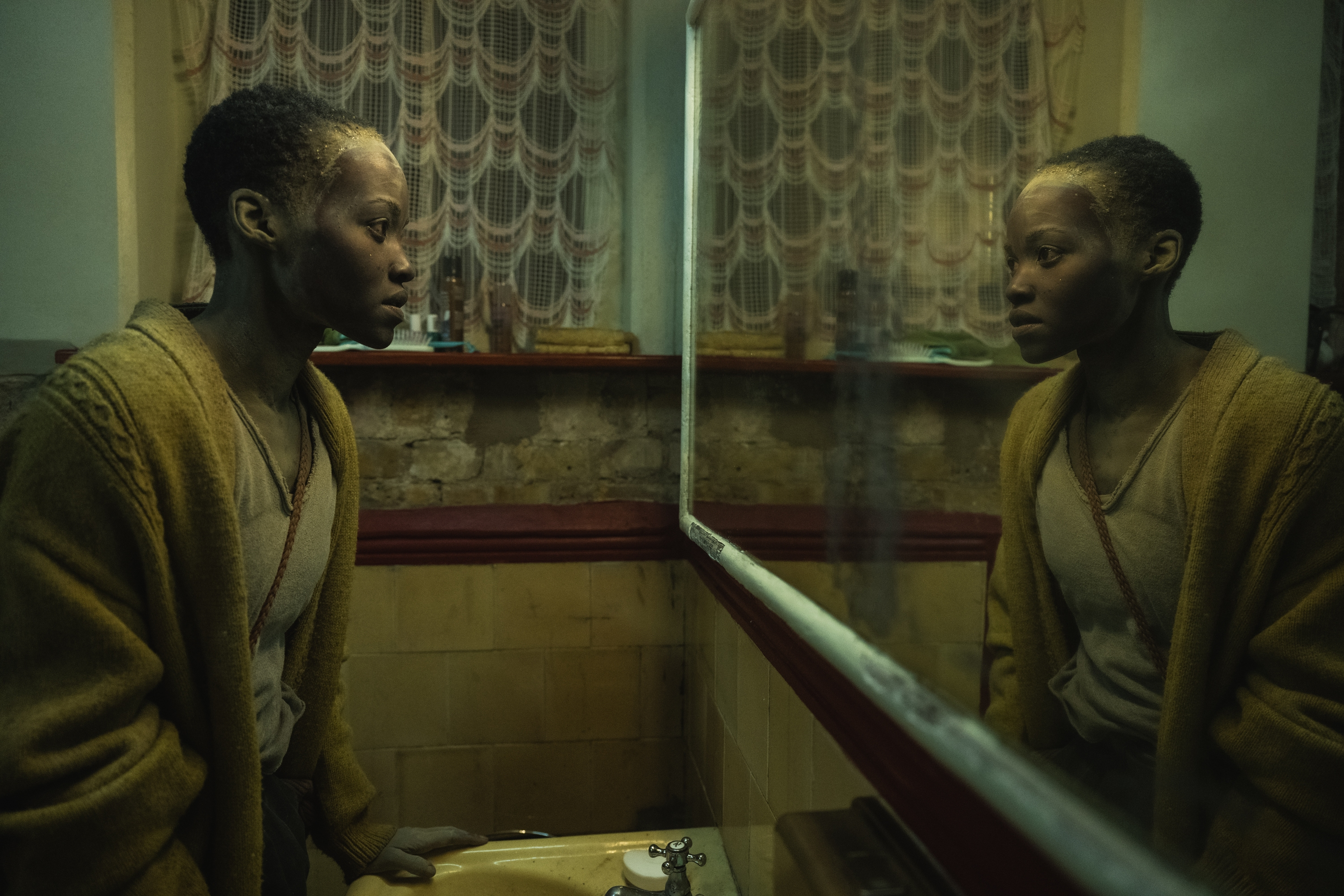
When the aliens land in New York, Sam becomes part of the ground zero event. The city is full of dust, terrified people, and the injured and deceased. Sam’s eventual shelter at the theatre reminded me of being a survivor of a disaster myself, namely the magnitude 7.8 Nepal earthquake in April 2015.
We had it better though, because the building we were in didn’t collapse, but going out on the roads of Kathmandu an hour later, I saw the damage – cracked roads, devastated buildings – including the firehouse two minutes from our house just completely plastered on the road. People were huddled in the middle of the highways or streets – terrified – because they didn’t want to be inside buildings in case they die there. There was no phone service, no electricity for several days, and aftershocks as strong as 6.9 during that first week happened frequently, daily.
There was a magnitude 7.2 aftershock a few weeks later on my dad’s birthday, when he went out of the city to deliver relief goods and to fetch a father and daughter to bring the child to the hospital for her broken arm. Her older sister, who was the same age as me back then (14 years old), perished when she rescued her little sister from their collapsing house. I visited the little girl in their tent (which they shared with three other families – very terrible conditions, but they had no other choice) – it was out in the fields because the buildings in their village were unsafe. We brought relief goods to them. I was asked to pray for her; she was still in shock and didn’t say anything.
My family stayed to do relief work in Nepal for almost a year, so the immersive disaster scenes in the film and the nurse Reuben providing aid felt so familiar. Other disaster films I’ve seen haven’t reminded me of my experience as much as this one did. I guess it’s because with A Quiet Place 1 & 2, we’ve only observed so far how people live under the occupation of the aliens, making us wonder for years how it was like for them to be invaded. And “Day One” isn’t a story about some heroes who discover what the aliens are and try to defeat them – it’s just about a bunch of ordinary people trying to survive – people like us.
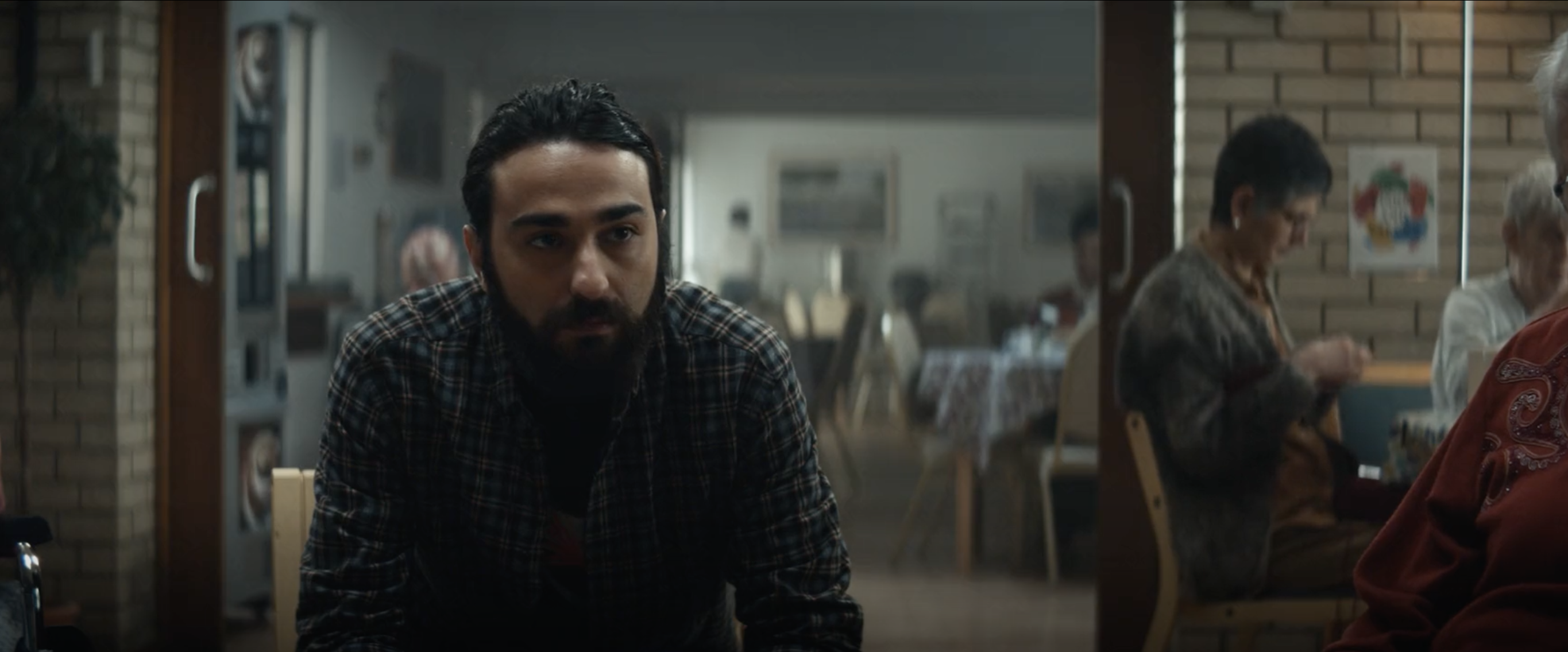
That brings me further into the theme of giving aid. After Reuben is tragically killed, Sam is left with only her cat as her helper and comfort. She continues on into the city and passes through the aforementioned crowd going to the boats, which is soon massacred by aliens. She rests in a corner, looking like she’s about to give up. Then, we follow her cat wandering around, stopping to drink water from a flooded subway. I’ve been waiting for Joseph Quinn to appear for so long that I knew he was gonna come out of that 😂
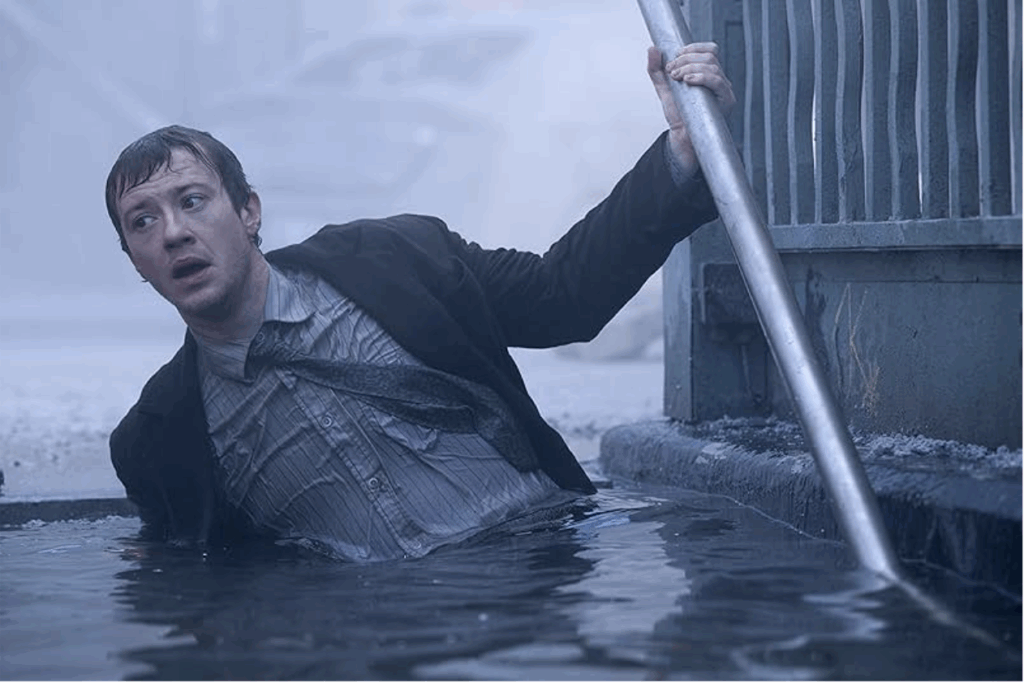
We go back to Sam, and Eric (Joseph Quinn’s character) is literally “look what the cat brought in” 🤣 and Eric follows them like a stray cat as well. Sam tells him to go away (so cute) when they shelter from the rain under one of those New York scaffolding roofs (a great plot device so they can talk freely, like the waterfall in the first film). Well, he’s super scared and doesn’t want to leave for the boats alone, so he stays with Sam.
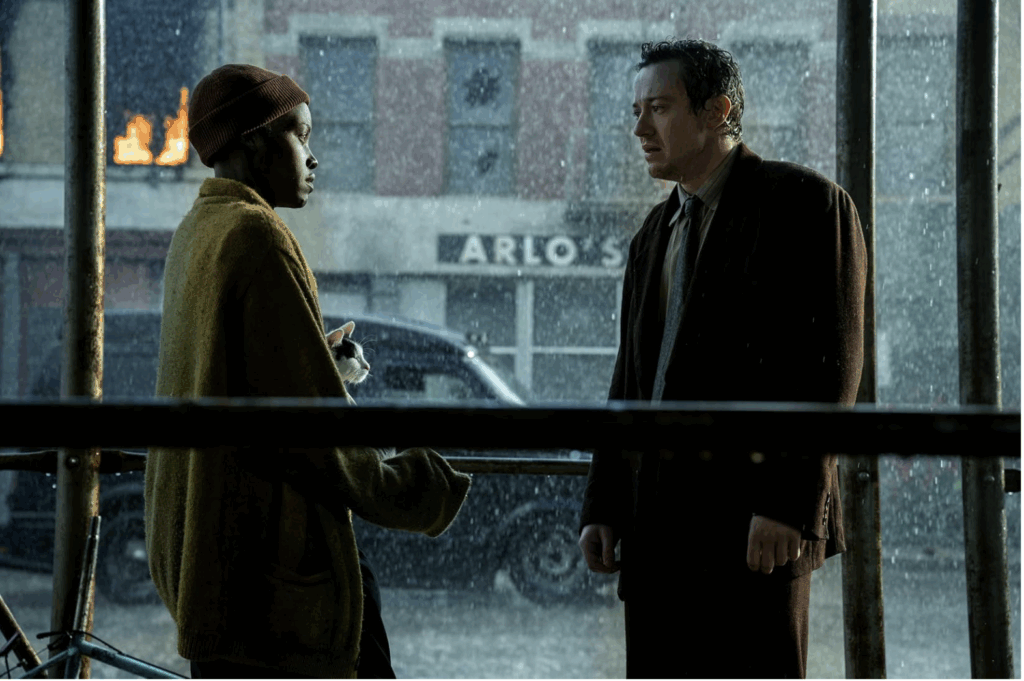
he just keeps saying “Okay. Okay… Okay.” over and over, which is why I think he was still in shock.
They go to Sam’s old apartment so she can look for her medicine. It’s interesting when she asks Eric to knock her door down – the writing allows for the audience to infer that “lol it’s not just because he’s a man – Sam has cancer and is too weak now to even try this”. And just as Eric wasn’t afraid or too proud to be scared and rely on Sam for help, Sam didn’t hesitate to ask (more like command, LOL) Eric to help her. (The whole waiting for the lightning to strike & kicking the door at the same time as the thunder was sooooo clever, and utilized later in one of my favorite scenes! T_T)
In her house, Eric finds out at the same time as we do that Sam was a published poet. She’s already been grieving even before the events of the movie because her father passed away and she lost this normal life of hers because of cancer. It was very profound. And I found myself relating to her even more, as a poet myself, and someone who thinks about grief a lot in the works that I create.
Sam lets Eric read one of her poems while talking about her sickness:
You said one to two years.
And it has been two.
You said four to six months, and it has been six.
And Mrs. Friedlander taught me subtraction,
And the corner store taught me addition,
And I used only simple maths all my life.
And I never needed more than more,
And less.
To four. To three.
To smaller and smaller.
Until months,
To days.
To hours,
To seconds.
But to not now
😭
Some of the layers within this poem being read is that, like Eric, we become privy to Sam’s expression of her feelings (we’ve only seen her looking tired and annoyed at normal moments and naturally scared at the disasters she’s just been through), and thus she is able to unburden her suffering, even for a little while. We’re enabled to feel compassion for her through listening to the poem and vicariously feeling Eric’s empathetic reactions.
In a deleted scene, Eric says he wishes he could tell his mum that he “met a real New York poet”. This reminded me of Langston Hughes – a Black poet from the Harlem Renaissance – and especially his poem ‘The Weary Blues‘. I used to read a library book of his poetry during the pandemic – an era that this film reminds me of. Sam’s poetry reminds me of his works; he used short lines and enjambments too. (I do have a little nitpick with Eric’s reading because he reads one word as “maths” – as in, mathematics – but Americans don’t use this term – it’s just “math”. Joseph Quinn probably read it that way because he’s British 😂 Anyways…)
After he reads the poem, Sam takes advantage of the next lightning strike and screams. The scream is multilayered because on the surface level, we see that she’s angry at her situation. We’ve also seen her in despair about her personal situation and the situation in the city. But also, remember – earlier, Sam was preventing herself from screaming because of the aliens (especially at Reuben’s death). She was finally able to unbottle those screams.
When Eric screamed after her, it was almost comical for me, because he’s been that stray cat character who follows everything Sam does. But it’s also moving because it’s a man screaming, from a place of relative safety. I remember my dad sharing how he heard men of the house screaming and yelling during aftershocks in Nepal. But he didn’t want my family or the volunteers working at our house to be scared during aftershocks – especially my two-year-old brother. So he would smile and say “Yehey!”, making the situation lighter. (Our neighbors probably thought we were crazy.) Anyways, in the movie, catharsis makes the two characters feel better, building trust with each other.
They sleep through the storm, but the next day, Sam leaves Eric, who’s still asleep. She stops at an abandoned bookshop and leafs through Octavia E. Butler’s “Dawn” (I fangirled here because Butler was an African-American sci-fi writer).

Eric turns up, and through gestures, she tries to dissuade him from following her. But he shows her the poetry notebook she forgot at home – helping him establish more trust with her, convincing her to take him again. It’s lovely to note how a poetry notebook becomes the most apparent mode of language, while in previous movies, it was sign language. Poetry itself – which is hard to understand at a “first glance” and relies heavily on metaphor to convey meaning – becomes a strong emotional vehicle for the film as well, stronger than what conversation could achieve.
As they get chased by aliens through glass-walled business buildings and through the New York subway (in a deleted scene, Eric implies that he was about to jump in front of a train, before the aliens came), they emerge from the subway-canal over into a Greek Orthodox church, which has a big, meteor-made hole in it.
As a Christian, I absolutely loved this sequence – people finding refuge and naturally staying quiet in a house of worship. The unconscious Sam even gets prayed over by a Greek priest!
When she wakes up, she is visibly more sick. So Eric does a brave thing by asking her what medicine she needs and goes out alone. I love even the detail of how he carries a page of her notebook with the sticker of the exact medicine Sam needs, because I’m sure many of us have gone out doing the same errand (without having to face killer aliens). In a jumpscare, we find that Frodo has followed him in the horror-core pharmacy.
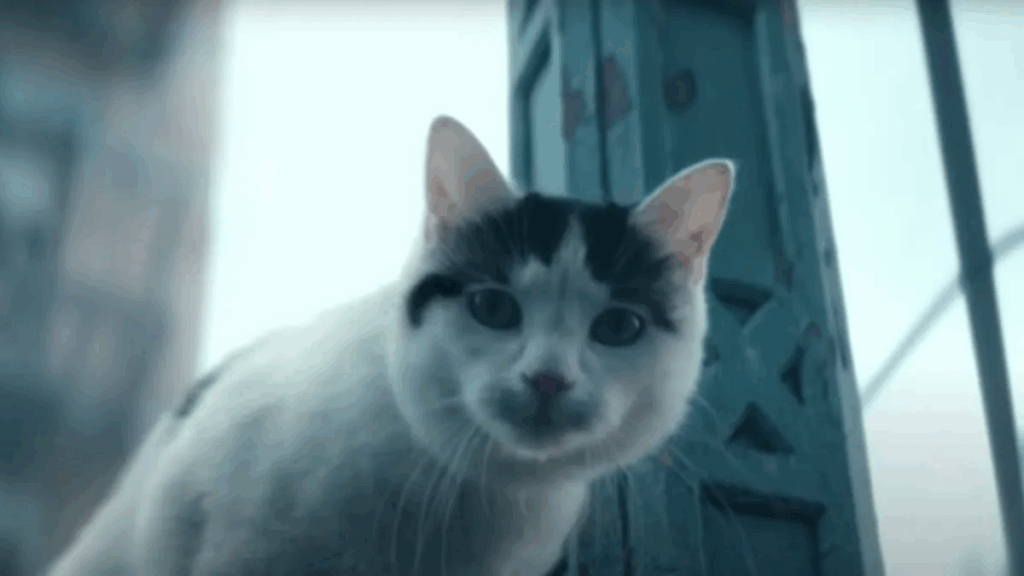
As they were walking outside among the rubble, I teared up because I realized how Eric has now become the caregiver instead of the recipient – AND he’s replaced Reuben as Sam’s carer. It’s like God was gracious enough to her by not allowing her to be abandoned, giving her Frodo and Eric. More than Eric’s character development, the second part spoke to me more, since I’d also been thinking about how Frodo was trained to purr and give comfort to humans showing signs of distress.
As someone who grew up in church with parents who involved me in their ministry – besides joining their humanitarian work in Nepal and cultivating a deep sense of responsibility, I also observed them counsel people and helped them provide hospitality at home, as the Bible instructs. I realized through the film that I was also taught to be sensitive to people’s hurts and pain and offer to help. Just like Frodo.
I guess it also comes from personal experience, as someone who has been served by people who were conduits of God’s comfort and compassion, especially when I needed them. Man, I’m realizing now that I’m like Eric too, because I want to give back. 😭
This also caused me to renew my prayer this season: “God, what about me? Who cares for me?” I realized I felt so discouraged. And I was myopic and dejected until I journaled after the movie, when He turned my attention to remember people in the past year and beyond – from Armenia, Manila, Abu Dhabi, Sharjah, and even Belgium – who showed His care to me, even those who weren’t my brothers or sisters in my faith yet. And that was a huge comfort and redirection of my feelings.
Okay, back to the movie. The following part is another sad moment – it’s when the two characters finally reach Sam’s pizza place called Patsy’s.
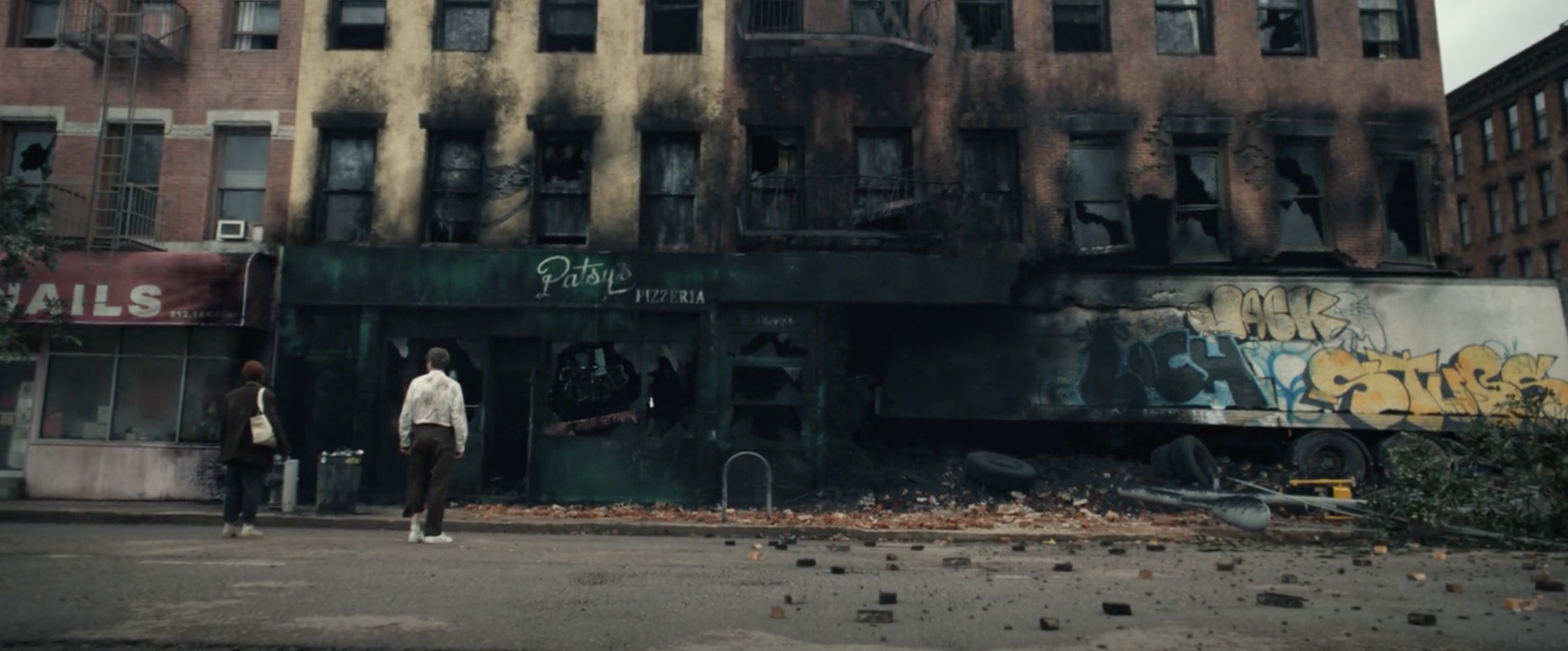
Devastatingly, it’s been burned down. And you can see hope drain out from Sam as she breaks down, crying.
I also wept because I remembered a pizza place from my childhood in the Philippines that’s also no longer there – it was the Aveneto’s at Trinoma Mall in Quezon City. We often went there after church with our church family; the pepperoni pizza there was my favorite. I miss the pasta, the parmesan cheese shaker, and this mural of construction workers (who were actually Hollywood actors) on lunch break sitting on a suspended beam over New York. I left the Philippines when I was ten, and the restaurant was eventually replaced by another one by the time I moved to Armenia (or even earlier; I don’t know, I wasn’t around to see it).
Earlier that day when I watched the film, I finished watching “Hook”, and it also made me cry because it talked about how we change when we grow up. Neverland was frozen in time for Robin William’s Peter Pan, so when he came back after decades, his Lost Boys had a hard time believing that it was him because he’d changed so much. I experience something like that whenever I go back to the Philippines, except it’s not just me changing – the people and places I love have also changed. That’s why remembering my own pizza place was even more devastating for me when I watched the scene with Sam. Both of our places of memory don’t exist anymore. I mourned the things that I had lost in my homes over the years.
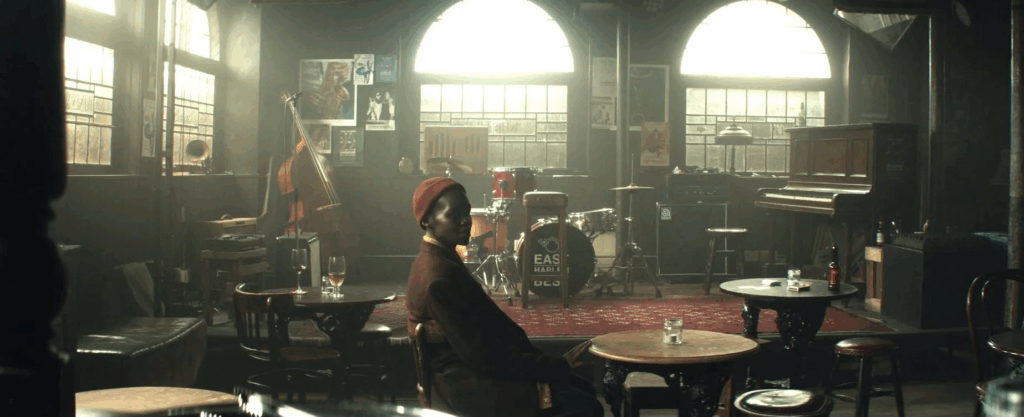
But I guess you could say that Sam and Eric’s jazz club visit is a eucatastrophe, as per Tolkien’s definition – they experienced deep sorrow, but, at the turn of the page, they were welcomed by a moment of grace.
Eric continues to become an agent of comfort by bringing pizza from another place (he borrows Sam’s marker and scrawls “PATSY’S” over the box). The consolation of pizza makes me want to honor all the people from the Middle East, the Philippines and beyond who bring us Filipino comfort food. If you’re one of them, thank you. (The next day after I saw the film, my mom asked for my food wishlist, which was requested by our friends coming to visit Yerevan from Manila. Encouraged by the movie, I wrote down 10 items 😂)
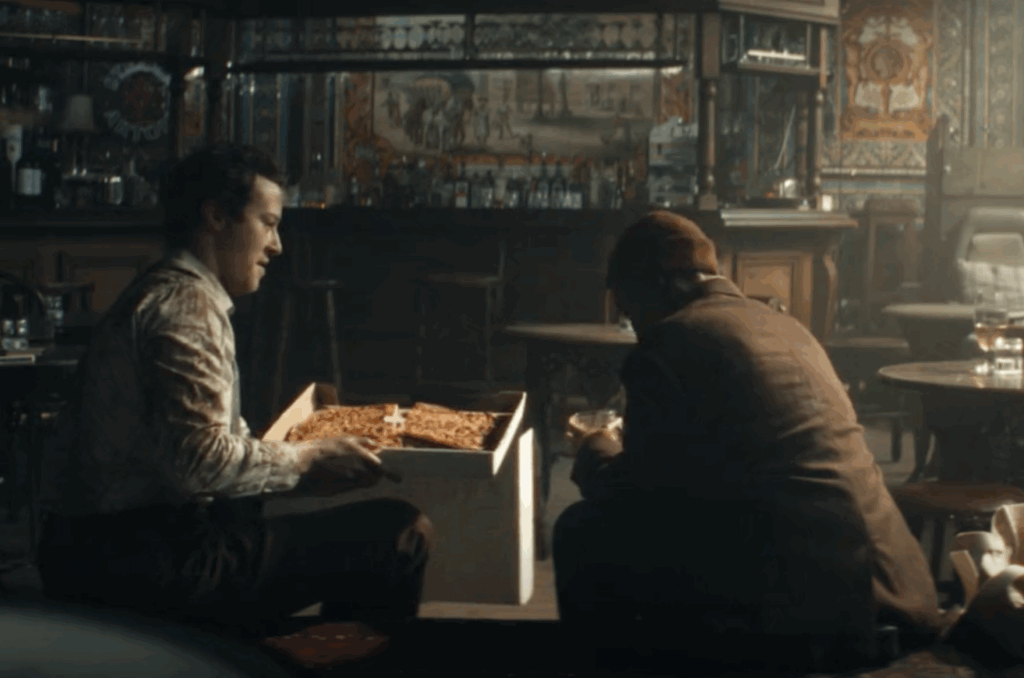
The pizza wasn’t exactly what Sam wanted (it’s not Patsy’s!), but it was exactly what she needed. The memories connected to the pizza place were what she wanted to hold one last time, since it was the place her dad would take her with his bandmates after he played piano in the jazz club. Similarly, I don’t enjoy my snacks as much as I used to anymore (my tastebuds have changed), but I understand that it’s the memory connected with the food that I want to cling to and be comforted by.
After finishing the movie, it left me with a deep sense of hope, even if it caused me to revisit painful memories and my grief. One of the hopeful details near the end was the detail of Eric first giving his coat to Sam (kilig moment for me as a fangirl lol), then Sam exchanging her yellow coat so she can keep Eric’s – a quiet sign of friendship, and a gesture of goodbye.
The film championed the theme of how strangers can be the best of friends, and that there is still care to be given to those who feel abandoned or alone. It reminds me to cling on to God, who is a healer and comforter of deepest pain.
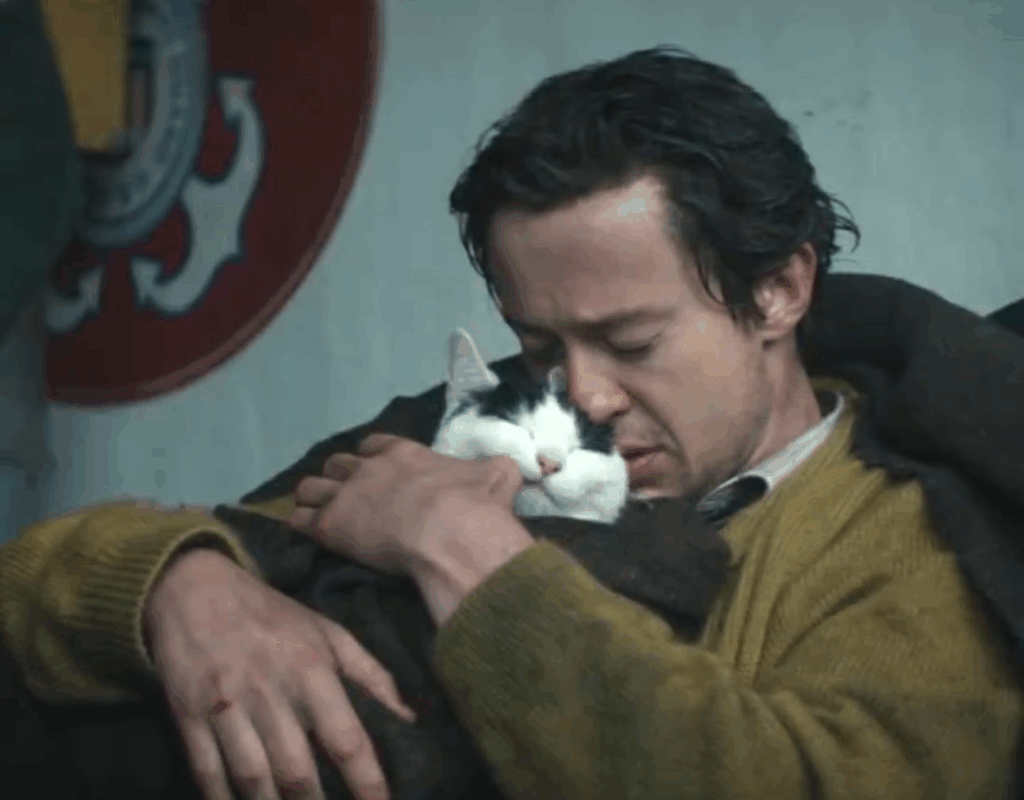
I’m glad to find another movie that hit me so deep because I watched it for an actor 😂 it’s like how I watched Midnight Special on a long flight because of Adam Driver, and it’s become my favorite movie ever since, and Jeff Nichols, who directed it, became my favorite director! (He was supposed to direct A Quiet Place: Day One, too – he even finished a script already – but I guess if he pulled through, they wouldn’t have hired Joseph Quinn LOL.)
I hope this movie has touched you too. I look forward to seeing more expansions of this world and for more stories about family and friendship to be told within its universe, because we all need it. (And I hope Eric will show up again, maybe as someone who’ll provide a clue about the aliens? 😂💗)
P.S. Here’s a song that also reminds me of the AQP films, from my favorite a capella group, Take 6. I thought it was fitting since Sam is a Black heroine 🙂