Here’s an account of how I made a film and gained experience from Michael Goorjian’s indie filmmaking workshop. I was chosen out of 80 applicants along with 20 other classmates and boy, was it a month to remember.
I was recently listening to a podcast interview with Jonah Nolan (Christopher Nolan’s brother who’s also a director and writer) about his career. He talked about how he switched from an International Relations-adjacent major to English and his writing career in his 20s. At one point, he was holed up as a screenwriter on the Warner Brothers lot, and he was going out to the Starbucks just to talk to people so he wouldn’t go crazy. He could visit his brother’s Batman set any time, but he knew he wouldn’t be useful. He missed being on set and actually being able to make a film, not just write it.
I felt just like him, before I joined an independent filmmaking workshop in person last month. I’m in my second year of graduate school studying Creative Management in New Media at Kieślowski Film School in Poland, but the course is mostly online, so, like Jonah, I’m getting antsy. Yeah, it’s important to learn about the business side of filmmaking and how the Hollywood and European film industries work, from professors who are in those industries themselves, but nothing beats getting out there to shoot something.
A few months ago, I learned about an independent filmmaking certificate workshop held at my alma mater, the American University of Armenia (AUA), conducted by Michael Goorjian, an Emmy-winning actor and indie director. The first thing that jumped out to me about his career was that he was in Monk (my family’s favorite show ever since we saw it in Nepal) 🤯 He also directed and acted in this beautiful film set in Armenia, Amerikatsi, which is a comedy and tragedy in parts. (I was avoiding having to watch it because it’s so close to what I did my thesis about – the Armenian diaspora – and I was still emotionally burnt out from it, but I watched the film before the workshop and I loved it.)
Anyway, I applied for his workshop, and I wasn’t sure if I’d get accepted. Somehow, this non-Armenian got in… :”)
A day before the workshop, AUA held a screening of Amerikatsi and a Q&A with Michael. Someone asked him what inspires him to make films. He answered, “I like to think of films as if they’re food. Sometimes you get junk food. But… I want to make films that make you grow, films that nourish. I want to make food for the soul.” And I knew I was in good hands.
So, the workshop took place over a month. It felt like being in a test tube with 20 fellow creative jelly beans/classmates three times a week.
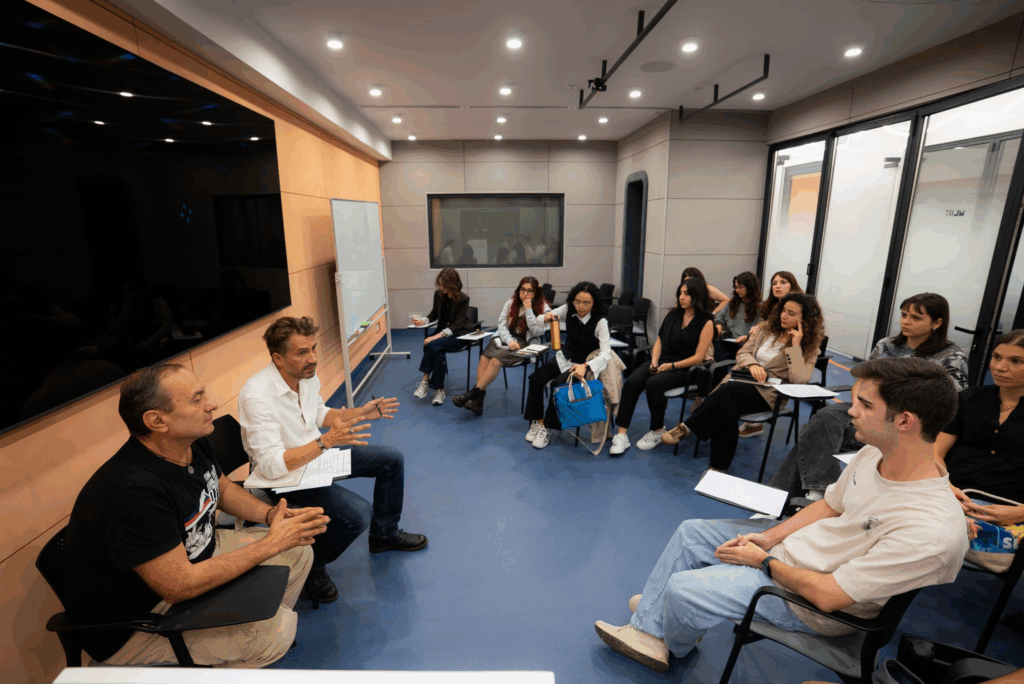
The first two weeks consisted of classes with theory and lots of exercises, and the last two weeks involved the actual filmmaking (…as Michael said on the first day, “I want us to MAKE something!”): scriptwriting, pre-production, and filming our movies. Btw, I’m not gonna recount them in detail because Michael told us he wants to do a ‘Season 2’ of this workshop, so I won’t spoil the specifics in case one of you readers will join it in the future 😉
What I really enjoyed in the first week was Michael pulling the curtain and letting us enter into the world of indie film(making), as he saw it. Indie film, according to our discussion, is a type of film done outside of the film studio system, which allows you to be more creative and experimental. (i.e. Studio film = big budget + less control; Indie film = small (or no) budget + more control.)
He took us through his first exposures to indie film in the 90s (funnily enough, the first example was a James Spader film – one of the actors who got me into filmmaking in the first place, back in 2021 🤣). Then Michael showed us clips of his own indie film work (he worked with Christian Bale & Kirk Douglas 🤯😭).
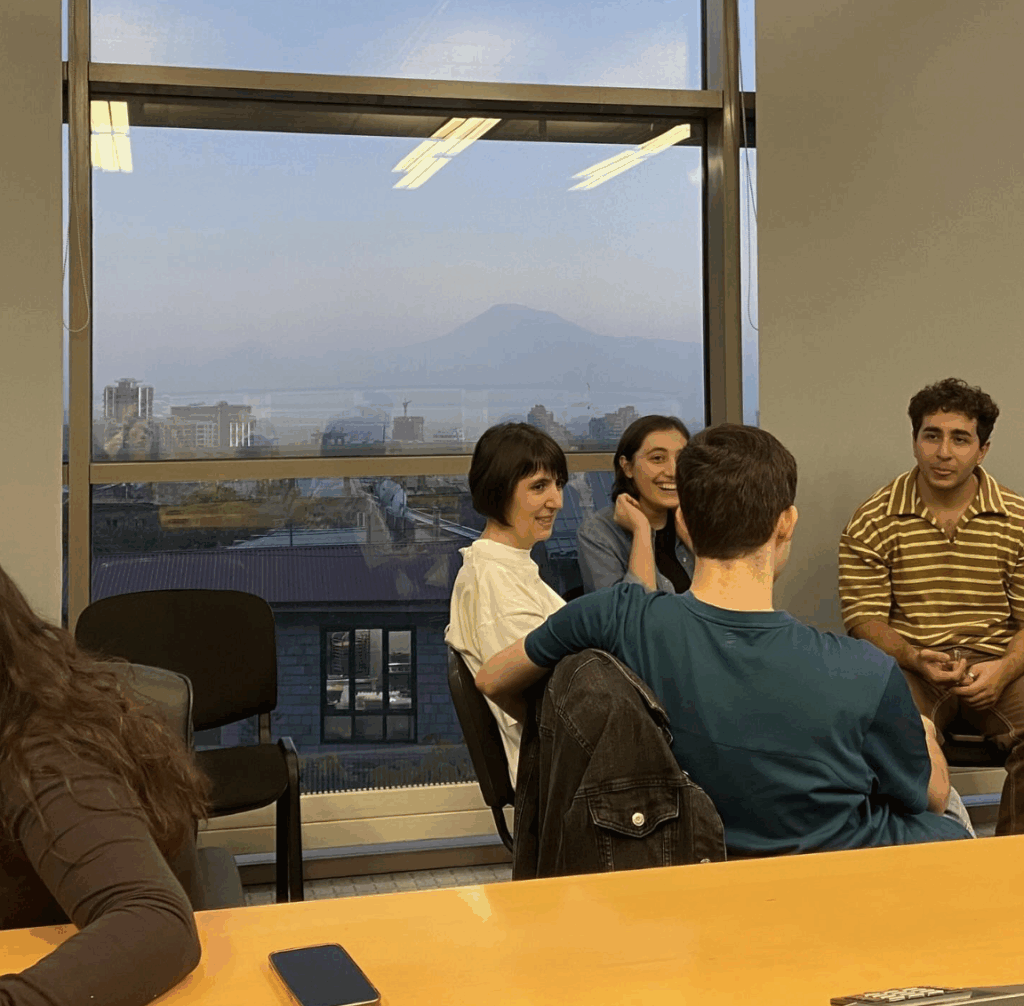
On that first day, I sat with two of my former students from when I was a writing consultant at university (two years ago!), and I was happy to reconnect with them through the workshop. One of them had never forayed into filmmaking before – what a privilege to start like this! – the other was an actress who became part of my group later on. I also recognized some other people there from the AUA cinephile-o-sphere – old friends who I yapped about film together in the university halls or at film festivals.
Being in a room filled with people who were passionate about the act of crafting and creating felt like such a relief, because, as I mentioned in my previous blog post, people have sometimes dismissed my pursuit of filmmaking. Being an artist entails being misunderstood. So, those first weeks, I was like, “Hey, I’m not crazy! I’m surrounded by other people who think like me!”
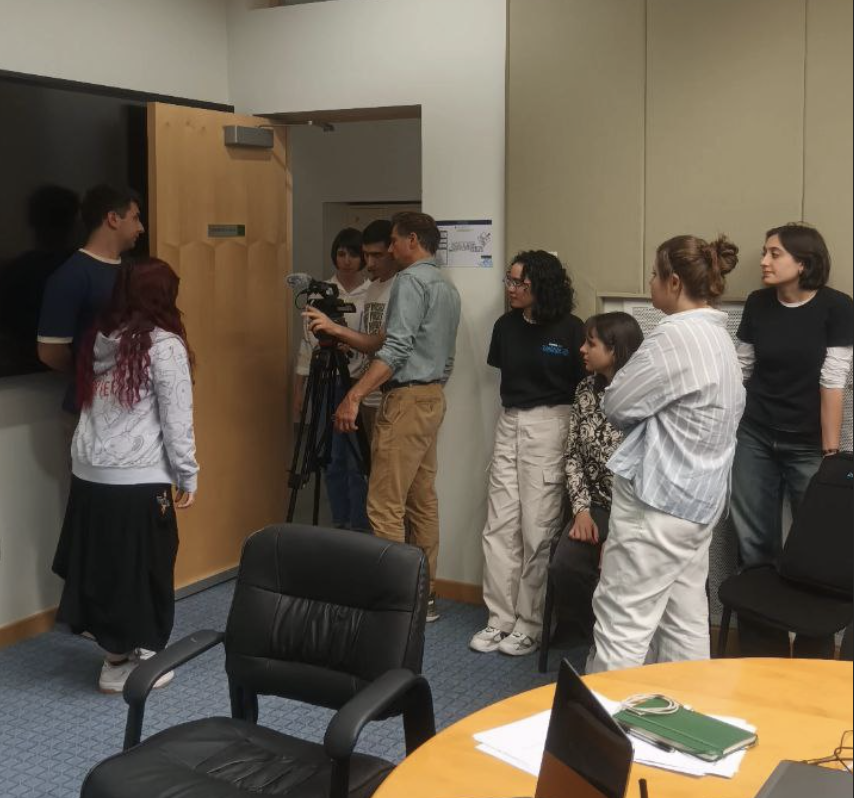
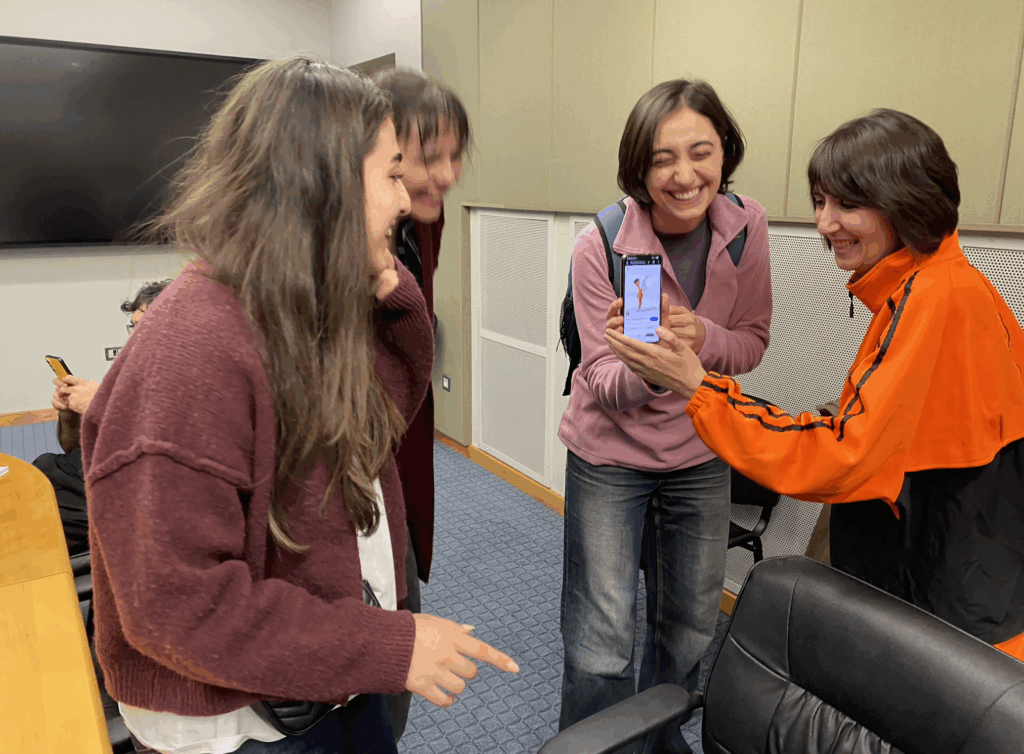
Soon, our class was sorted into four groups so we could make four short films. We had to collectively come up with a uniting theme like Kieslowski’s Dekalog, our homework film, which was based on the Ten Commandments. I jokingly suggested “Four Horsemen of the Apocalypse” – and funnily enough, we settled on Four Types of Love (renamed “Four Phases of Love” later on) – i.e. familial, friendship, romantic, and self-love (I mean, the original was selfless love, but they interpreted it differently…) – which also has biblical roots like Dekalog. Each group was assigned one type of love.
My group of five gradually became a family: two diasporan Armenians, two locals, and me, the honorary Armenian grad-student. We called our crew “s/alt productions”. Salt of the earth, light of the world, a city on a hill.
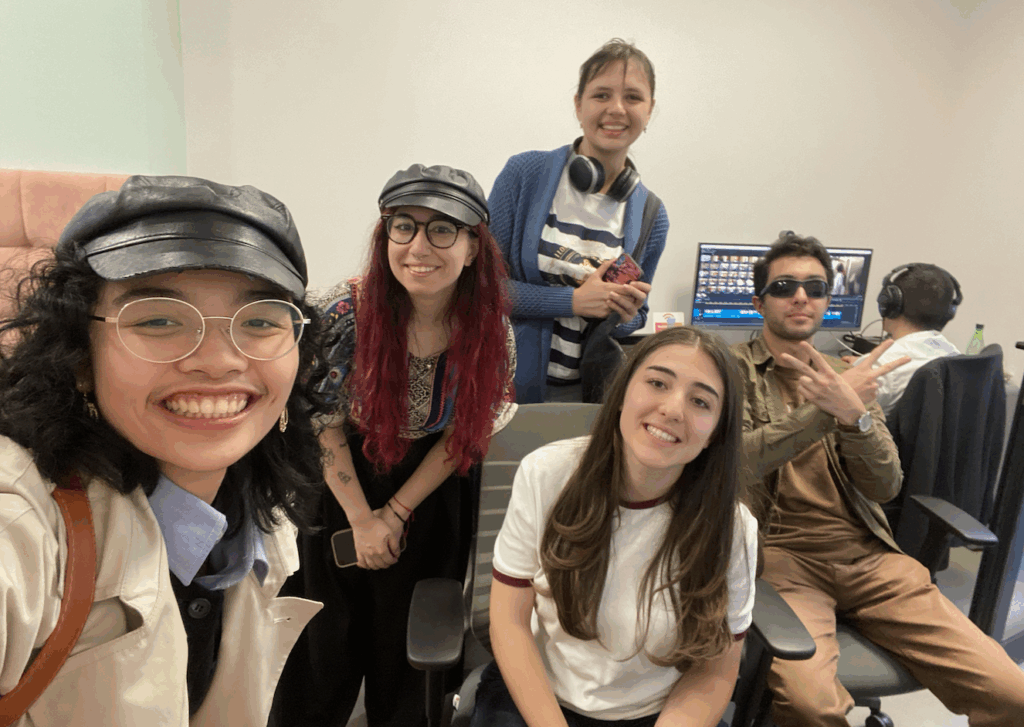
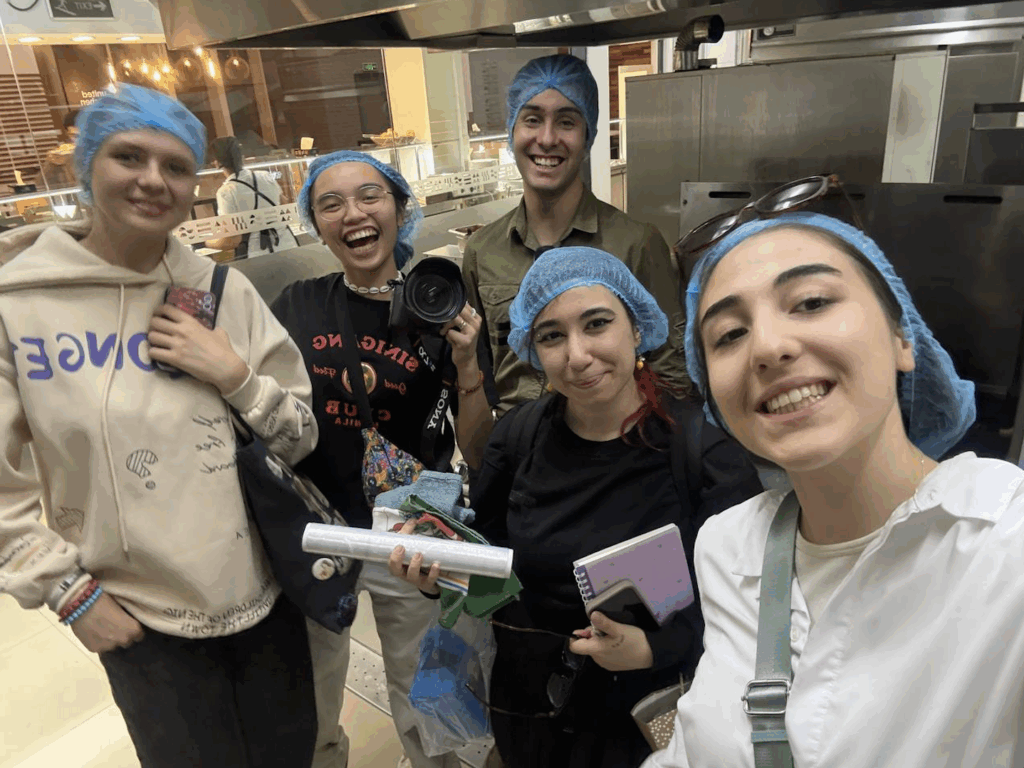
They were all bachelor’s students and I was a master’s student – but we were all on the same boat of never having shot a short film of this scale before: AUA MediaLab’s equipment and editing suite at our fingertips, the tutelage of a Hollywood veteran, and a university to romp in. (While we’d shot films here before, we never got access to the cafeteria kitchen – in my six years associated with AUA, I’d never been inside it 😆) Other groups had people with more experience – for example, my friend was a TV cameraman and another used to teach Acting Techniques at AUA, and I felt nervous about whether we’d make it through 🤣
We wrote a script together and did various pre-production tasks: location scout, sending a 4 Privet Drive amount of emails, creating a shot list, and testing the camera and sound equipment.
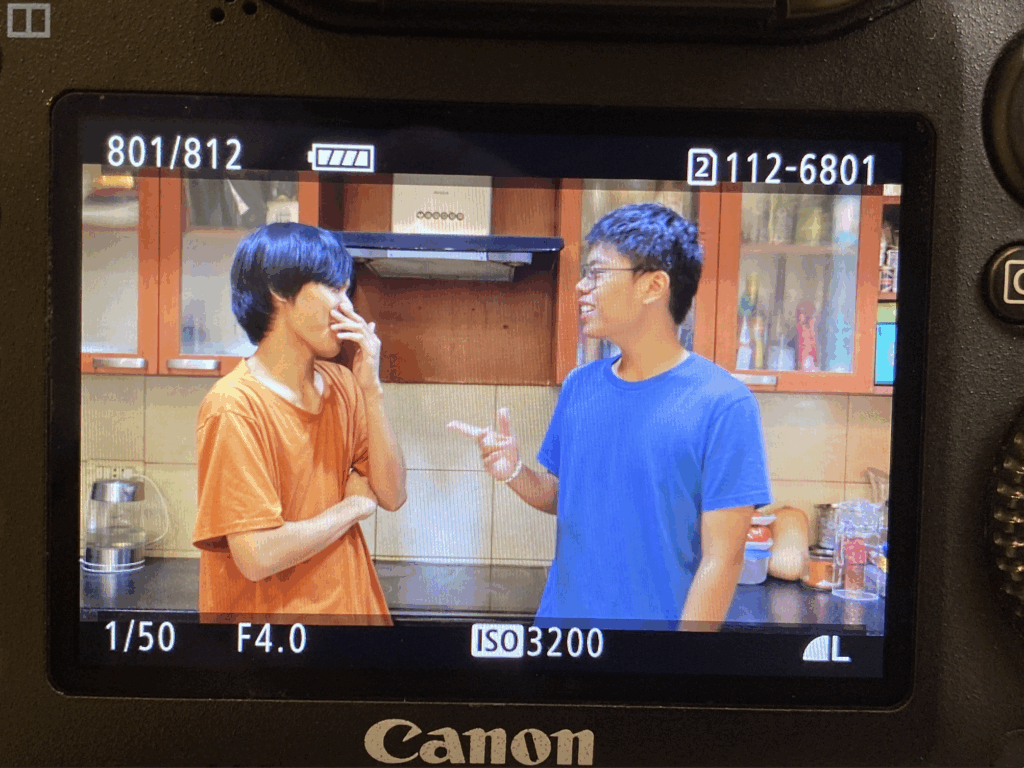
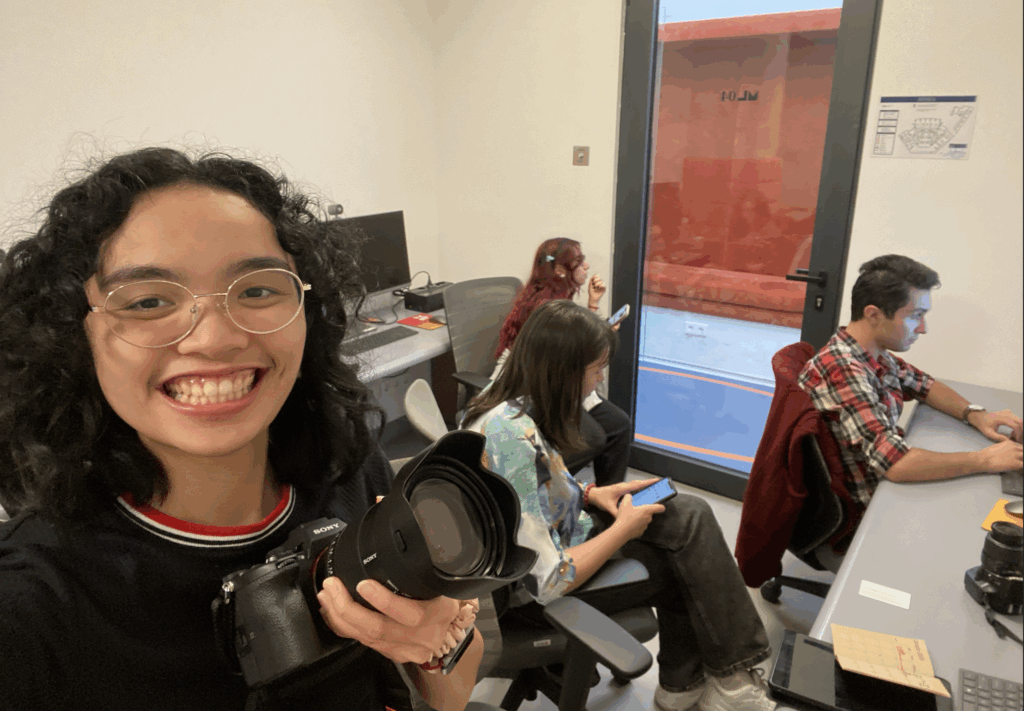
I originally wanted to try out directing, but I ended up mainly producing – the logistics and task management parts – (I guess you could call me an AD too) and working with the camera. Though, I had to also relegate the cinematographer role because we were either understaffed (we asked help from a volunteer on the first day) or I got sick (which happened in the latter part of the final day).
Everyone did a bit of everything too. For the end credits of each of our films, Michael told us to put everyone’s names under “Filmmakers”. At first, I thought it’s because it’ll stop people from fighting over titles, but it’s also because everyone’s roles inevitably overlapped.
The days leading up to our shoot, I felt like I was a kid being thrown into a swimming pool without knowing how to swim 😂 But I’d watch my teammates be all smiles going home after class, so that helped a lot.
One thing I’ve realized about learning a new skill (whether in art, cooking, coding, etc.) is that your first try is always going to be the worst. Absolute train wreck, sometimes. And then you keep doing better and better because you learn from your mistakes.
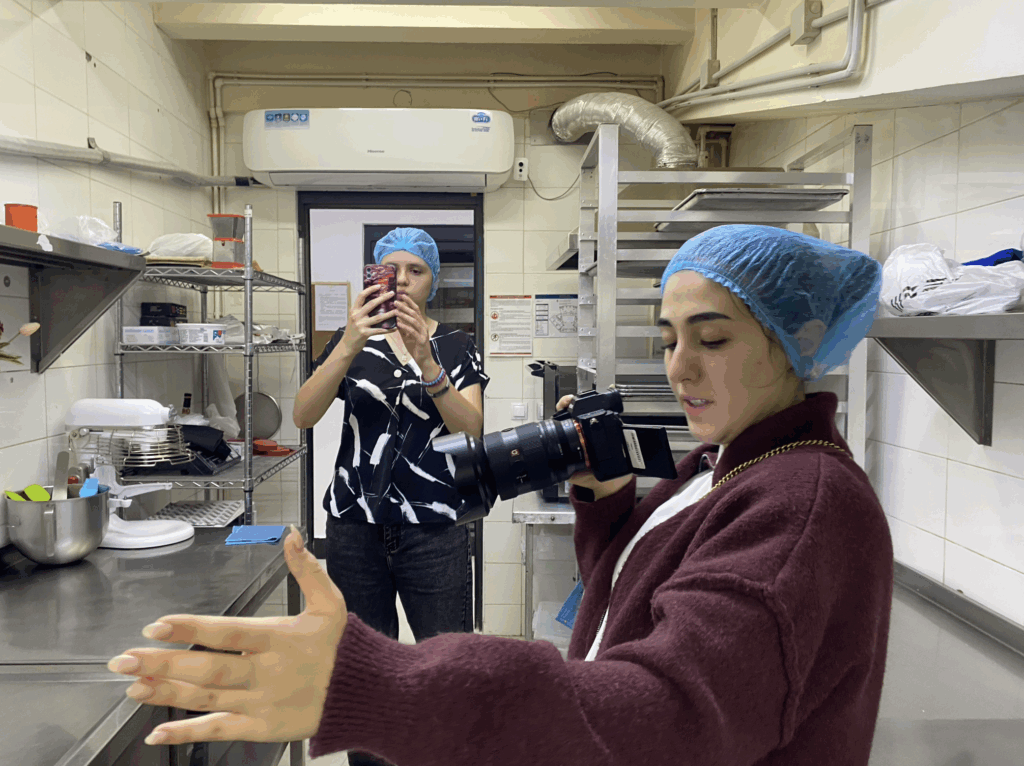
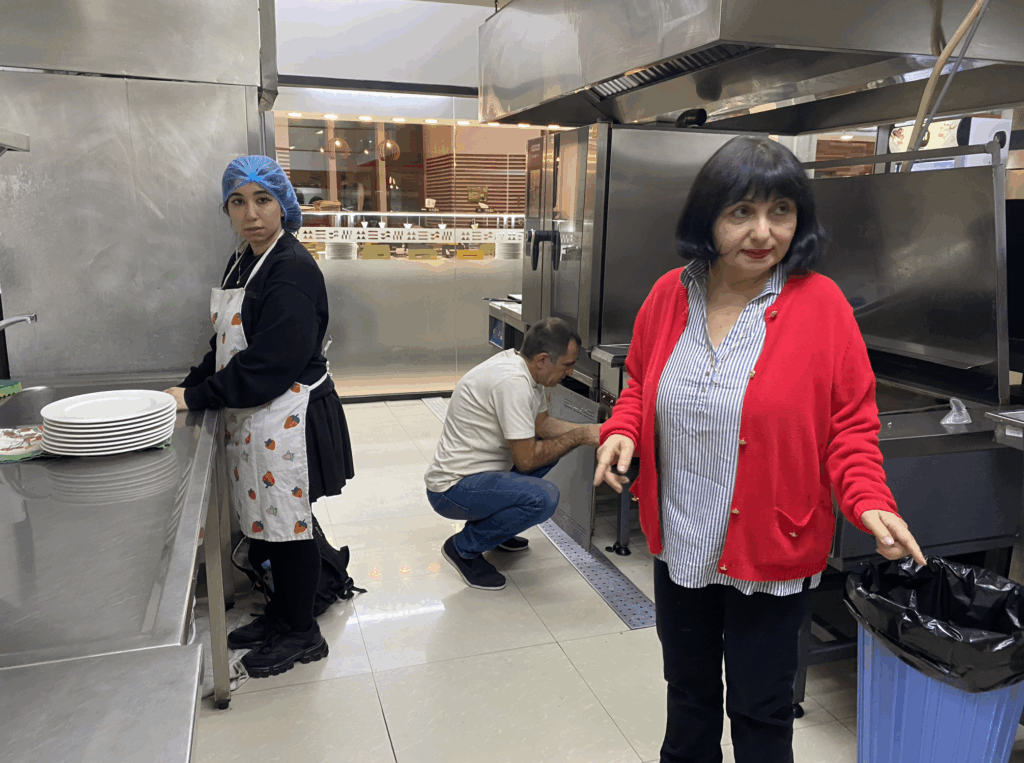
That’s how our first day of shooting went like. We had a ton of problems – some, we couldn’t control (teammates got sick; the cafeteria kitchen management only gave us 2 hours to shoot per day – not enough, although we got to negotiate for more time, eventually); some we didn’t properly prepare for (we didn’t create an order of what scenes to shoot first, so we also didn’t get to tell our actors to bring extra clothes for other scenes), and some were just our silly mistakes.
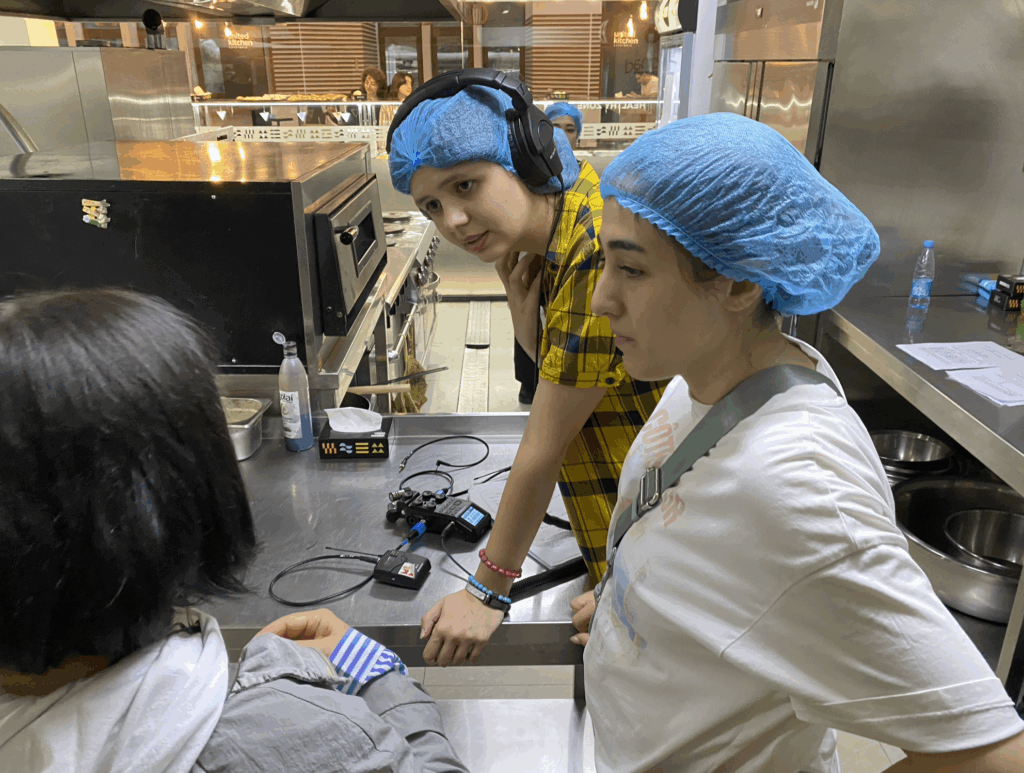
For example, we didn’t check our Zoom mic recorder battery, which died immediately. So, after we panicked, my friend assigned to sound had to run down to the lab and get new batteries, and when she came back, we found out it didn’t have an SD card 😭 She had to run and come back again.
At the end of shooting, our second actress, Armine Abrahamyan (professor of Acting Techniques at AUA) gave us a reassuring smile – “In one week, you will have a film. Don’t worry. You’ll make it.” We really needed to hear that.
On the second day of the shoot, we felt more comfortable. And we had this funny set-up with the sound – we didn’t need the Zoom recorder which was only needed for two actors (we only shot one that day), but my teammate had to hold the receiver attached to the camera and use the headphones, sticking next to me the whole time (I called it our ‘caterpillar rig’ xD). The headphones were buzzing with feedback that day and for the rest of the shoot (probably because of all the kitchen equipment humming with all sorts of radio signals), and we didn’t have time to fix it.
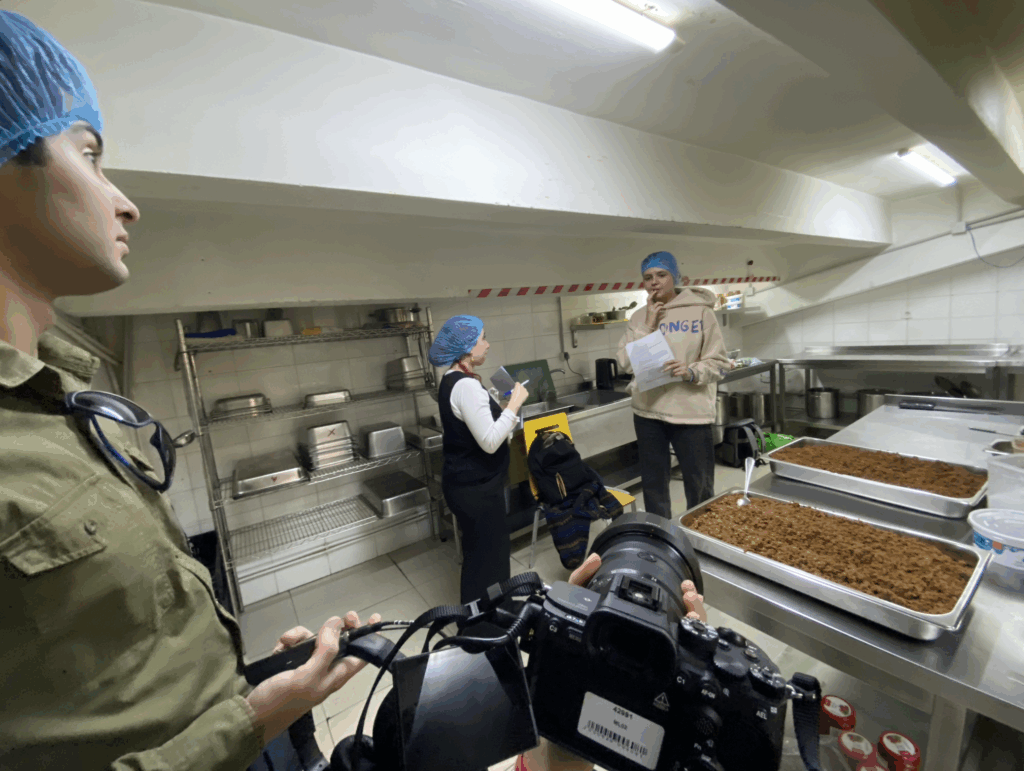
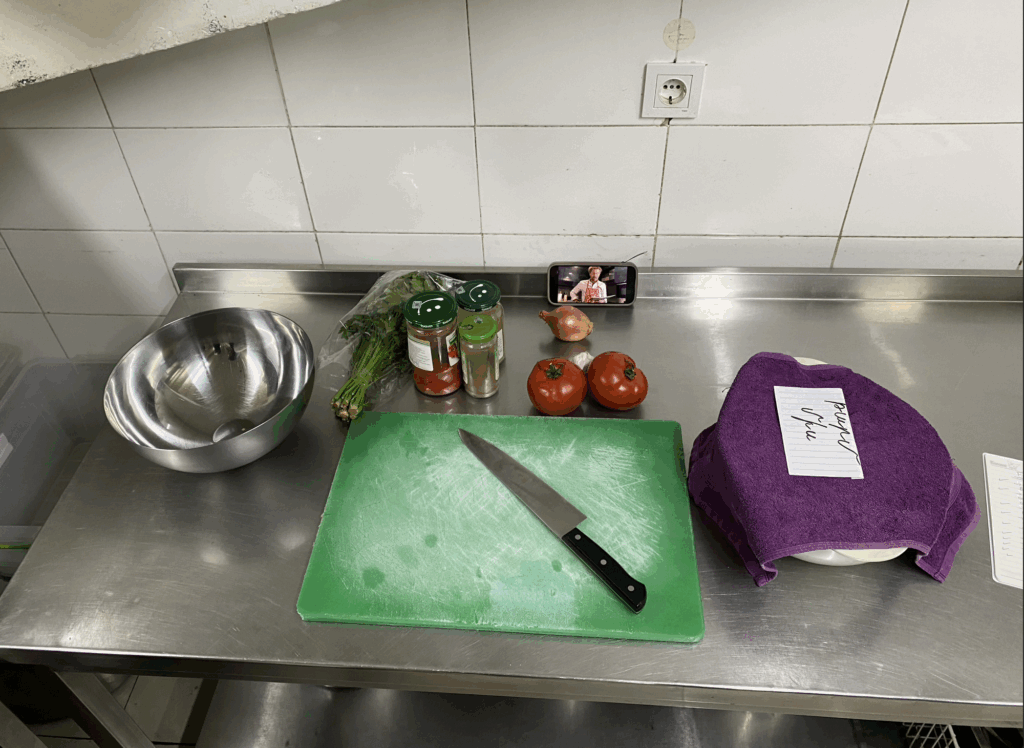
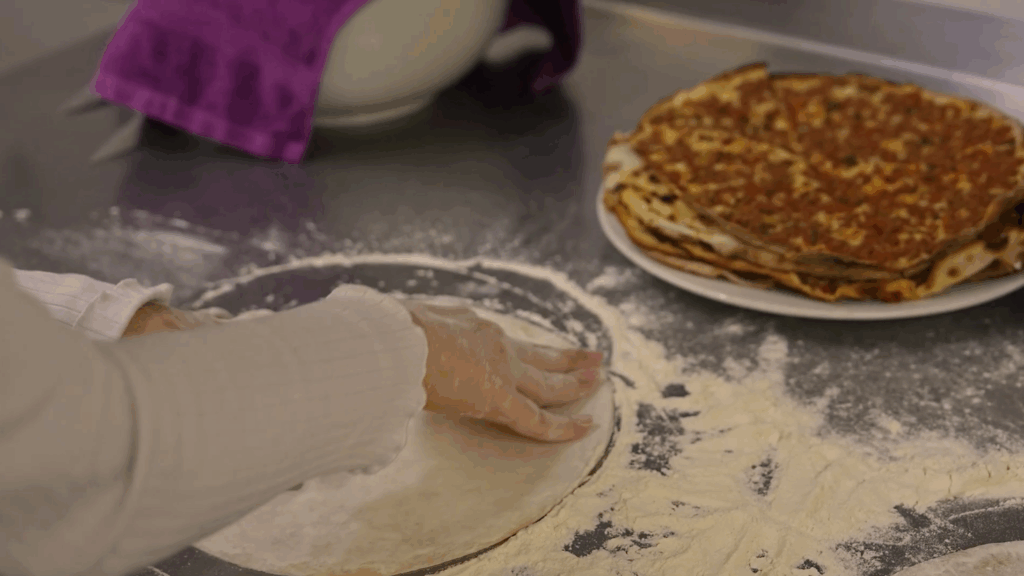
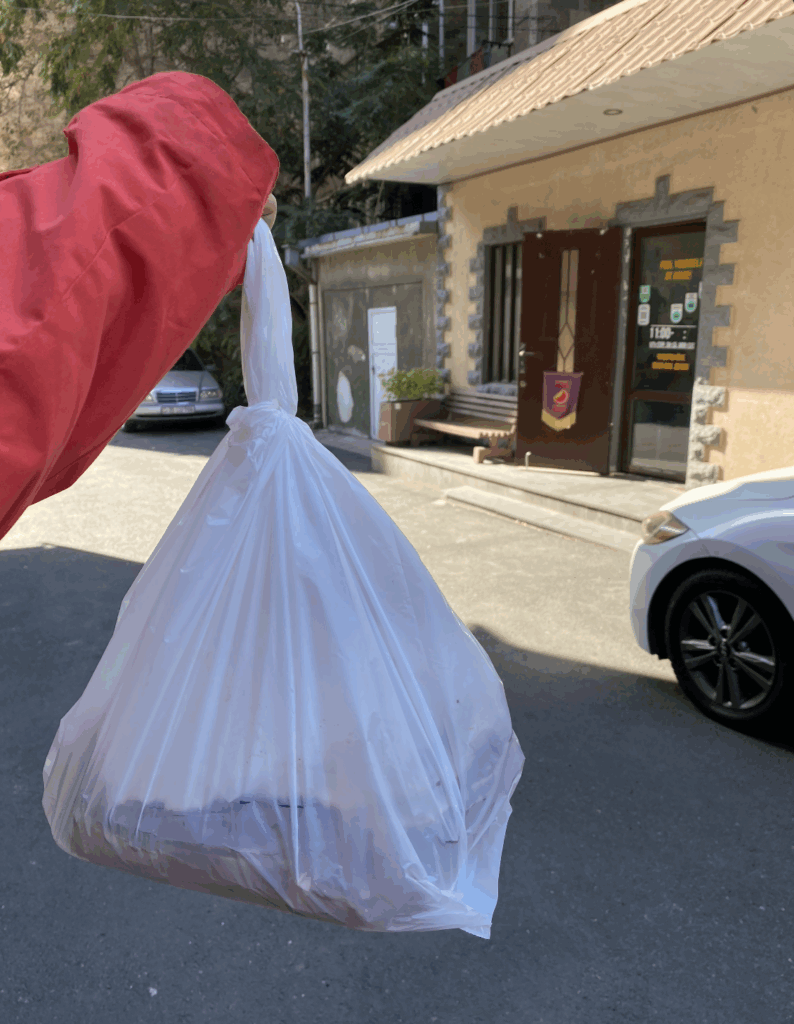
On the third and last day of the shoot, I got sick (I didn’t rest enough 🤦🏻♀️) – exacerbated by running around the city to buy real lahmajun – so, as previously mentioned, I relegated the camera to a teammate.
Before I handed off the camera, we had shot several takes of a very emotional scene, and it was amazing because the sound gal & I were thinking of all these technical things – framing, ISO, camera movement, audio – but then the acting just blows it all out of the water, and we were moved to tears. Magic.
We went down to the bus stop that evening to shoot the last scene, and it was a bit tough, since it was a busy spot (in the editing room, we had to discard a good take because a passerby looked into the camera 😭). But we pulled through, and, after “Cut!”, I almost cried out of sheer joy and we all hugged each other.
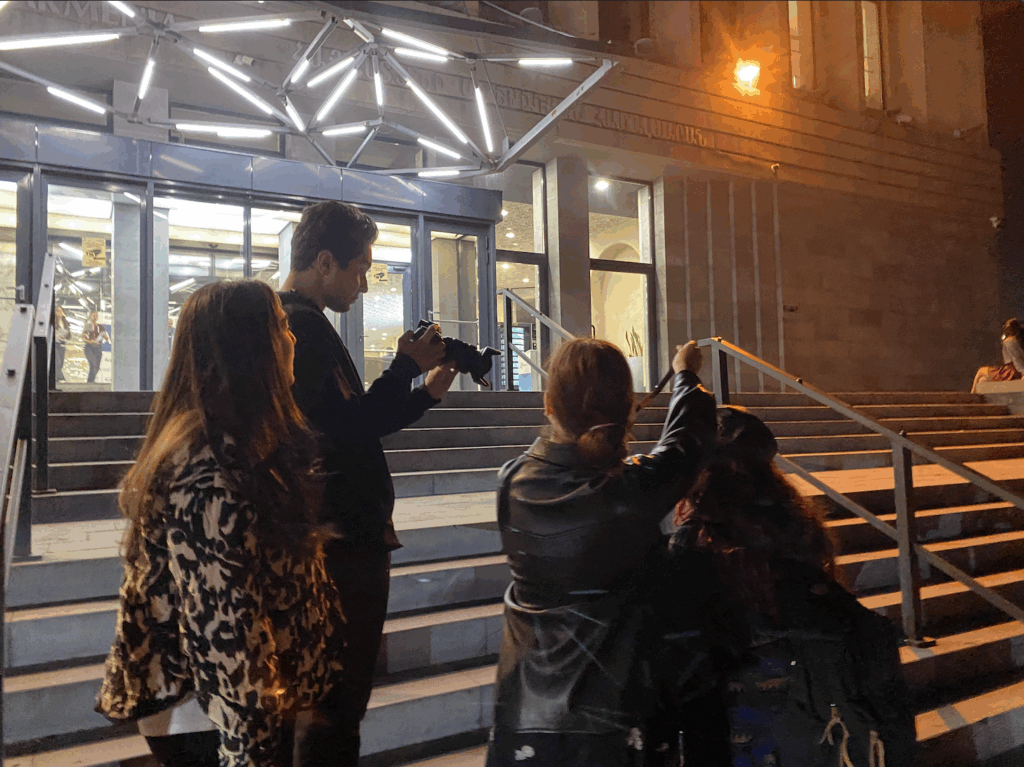
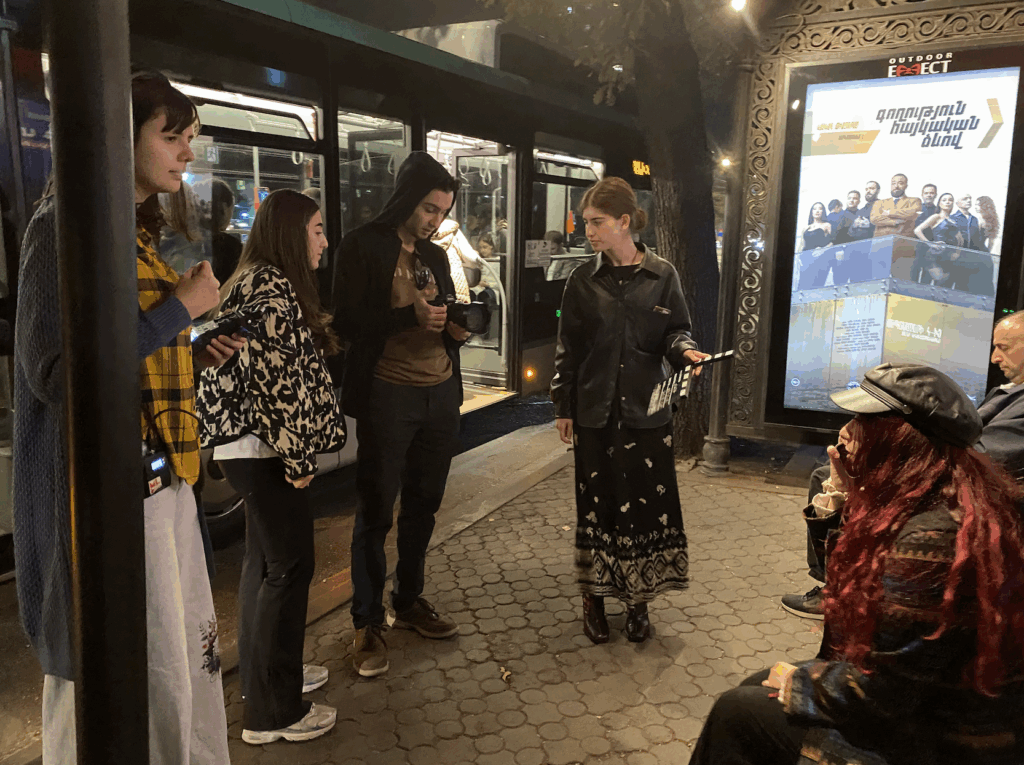
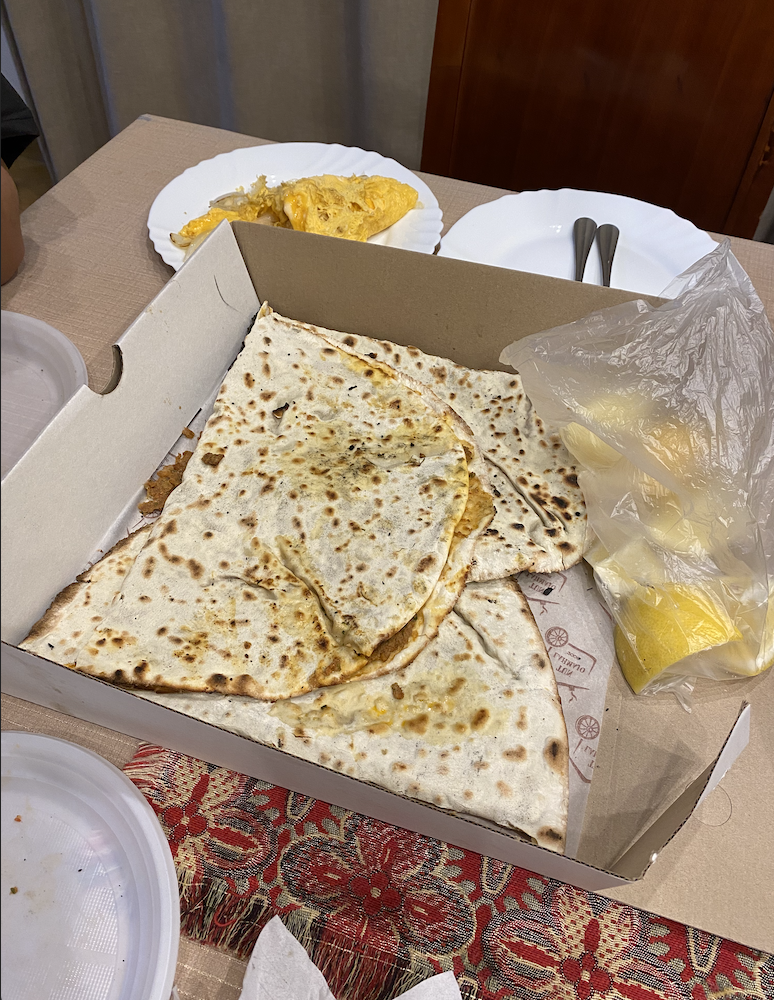
We trooped back to the editing room and decided to eat our lahmajun props to celebrate, while we left the SD card to upload our files into the university computer. Grave mistake. We were having fun (it was a mini afterparty) when I suddenly got a text from the staff. They accidentally pulled our card out while it was still uploading, since we didn’t leave a note saying who was using the computer and why we left 🤣 Thankfully, we already had one successful upload (we tried to make two copies and we continued making the second copy the next day), but it was a lesson for us silly noobs.
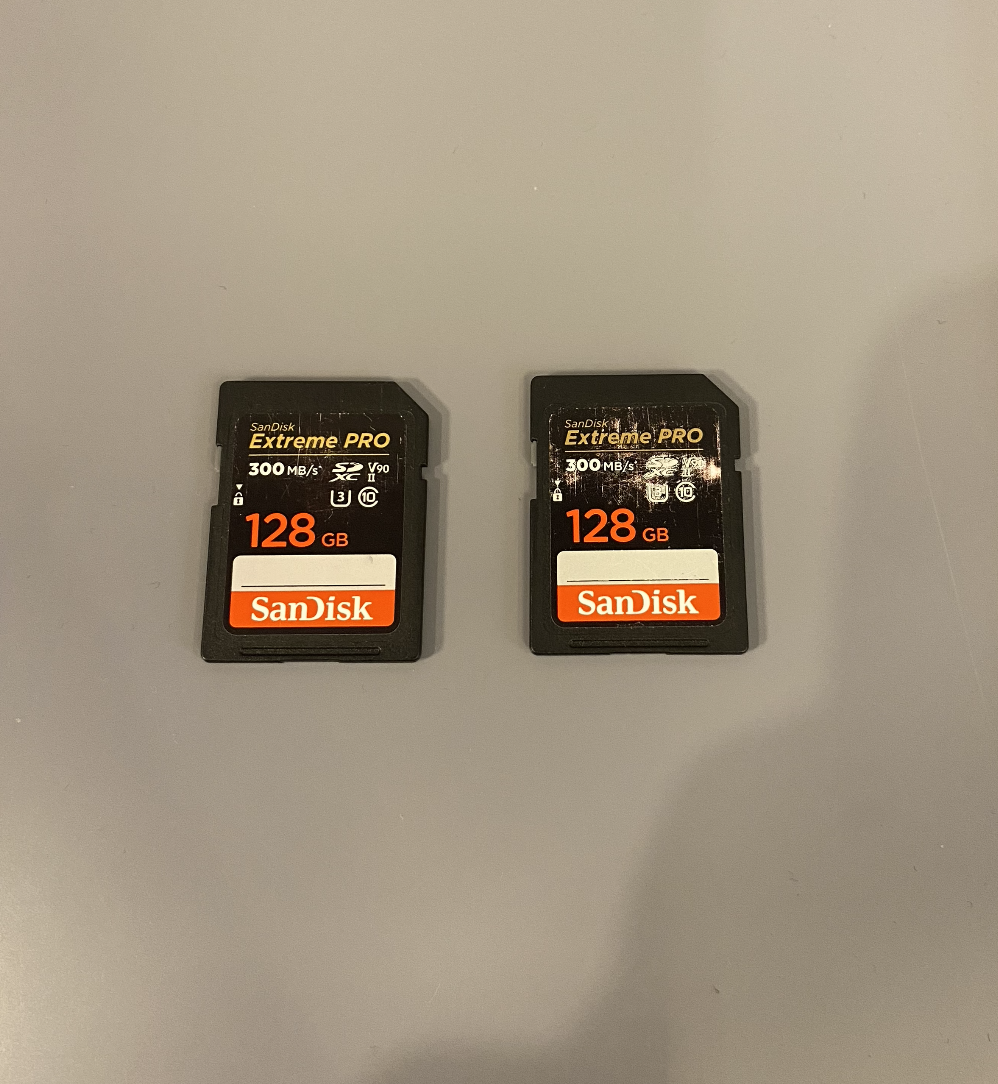
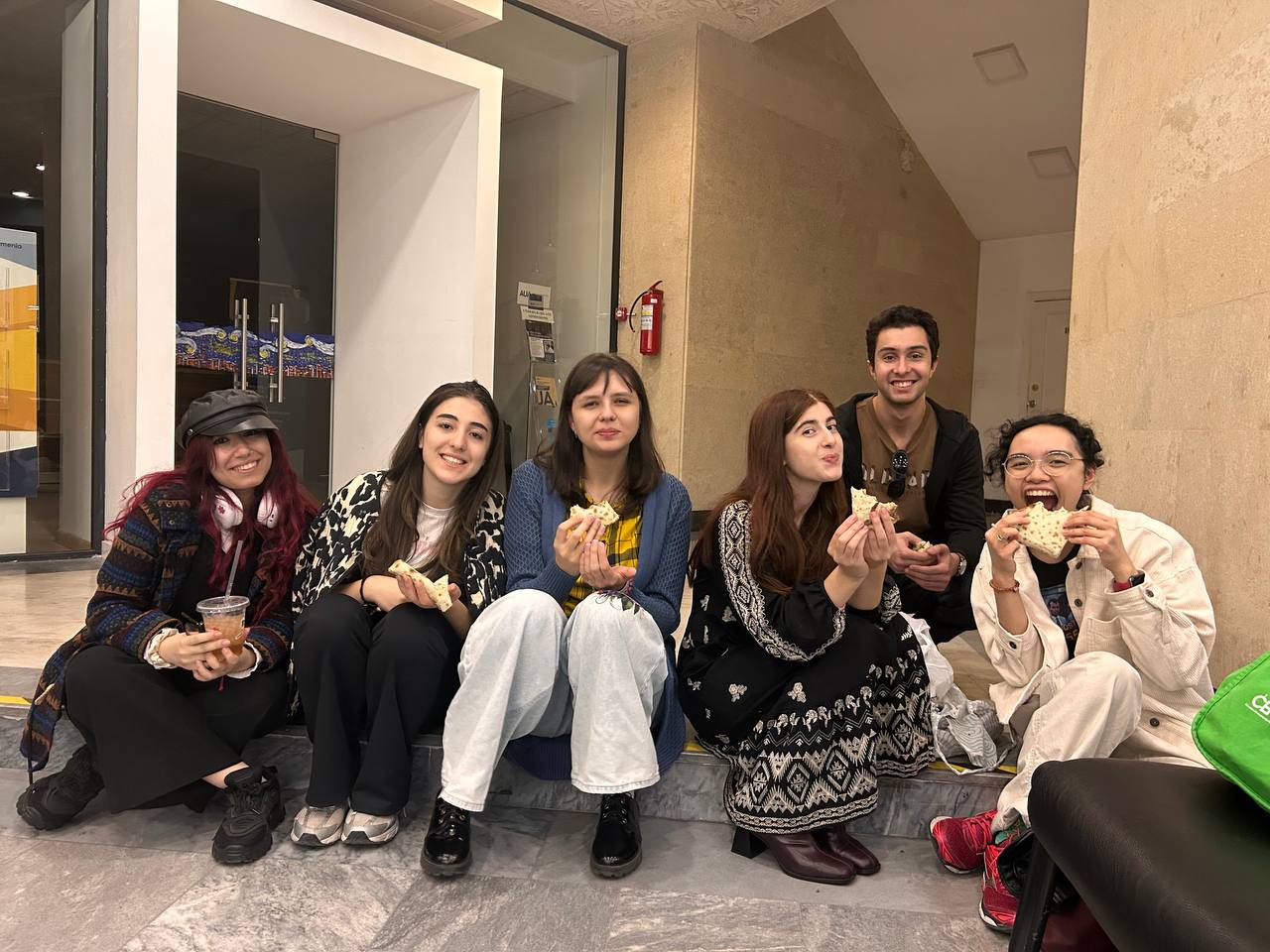
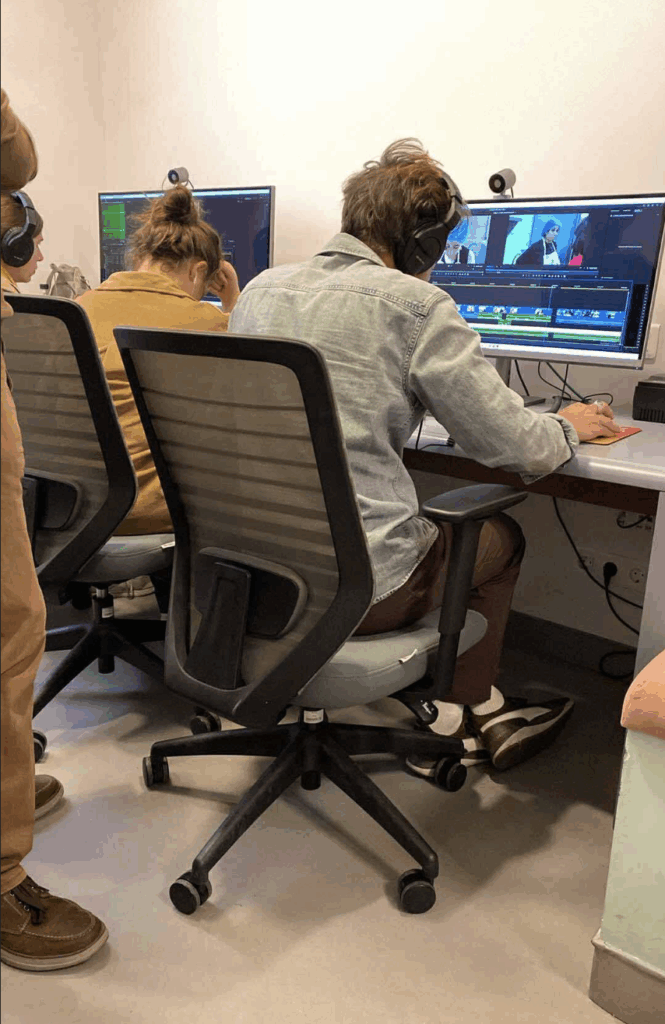
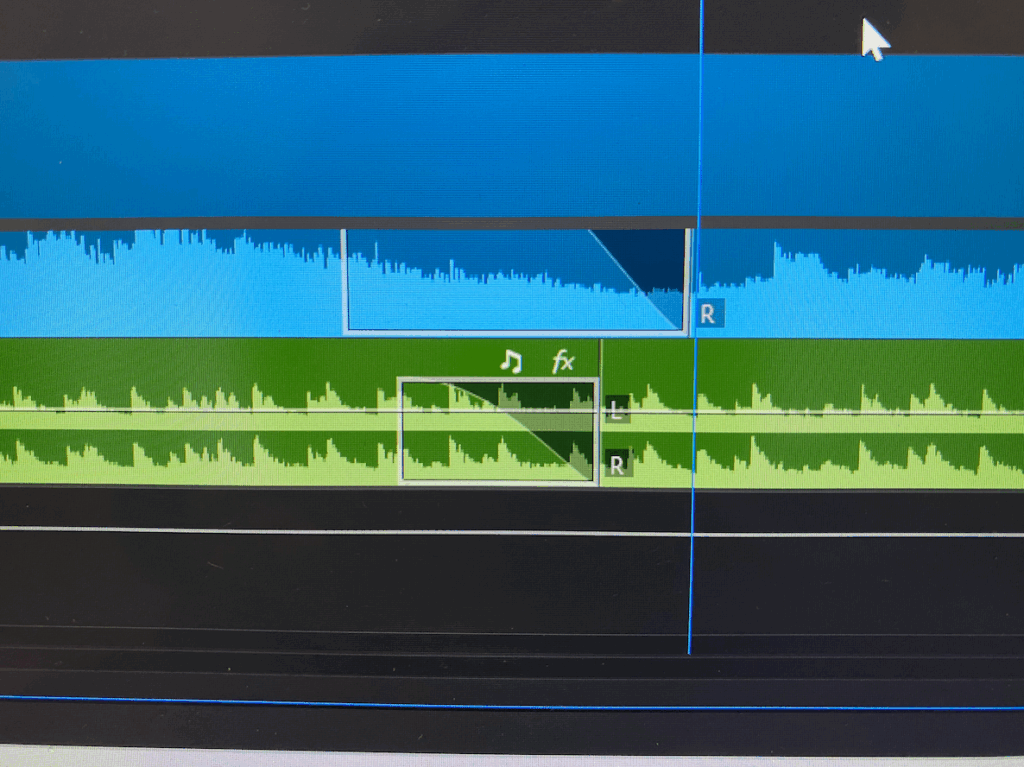
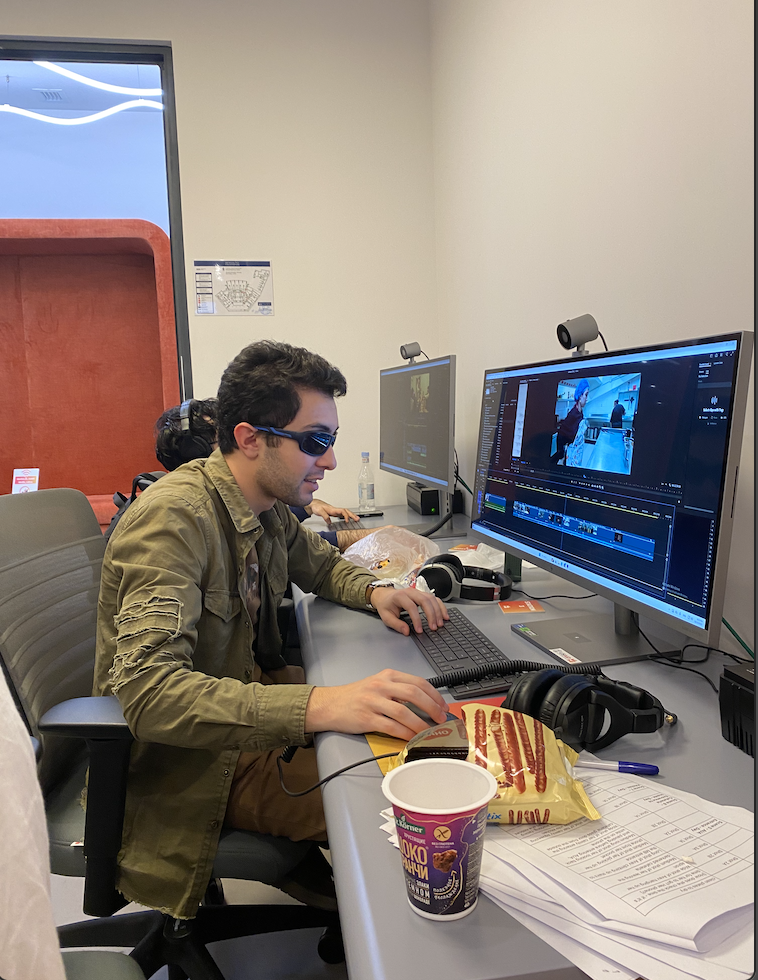
Editing covered the next three days over the weekend. Since the bulk of the editing was done by Anna, Artyom and Nastia, I was kind of there as a jester along with Meghrie to cheer them up with some icebreaker games and snacks 😂 They asked me to do the music editing on the day before the premiere, and since we were allowed to use any music (“You can use Lady Gaga if you want,” Michael said 😂) because it was just for educational purposes, the nerd in me used a track by David Julyan from Christopher Nolan’s first film, Following. We stayed up late out there till midnight to complete the edits.
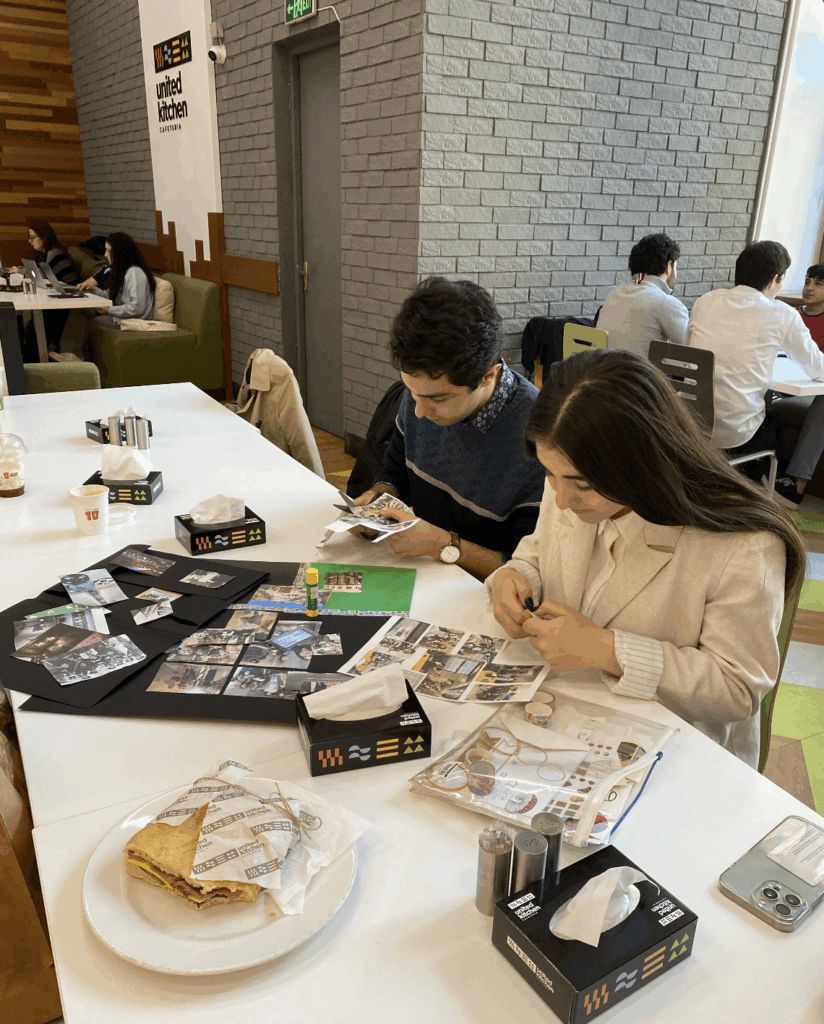
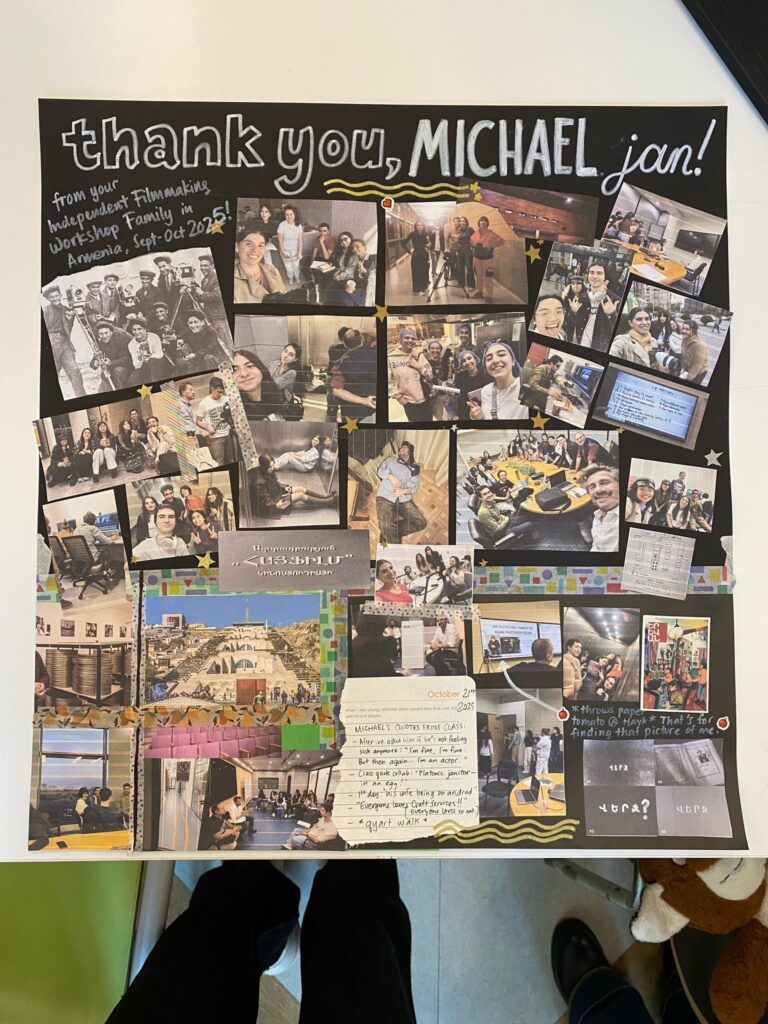
An hour before the premiere, my classmates and I had a secret project – we were making a thank-you poster for Michael, which we planned to give him after the event. We gathered in the cafeteria to glue the collage; even our workshop-mate’s children helped out 🥹
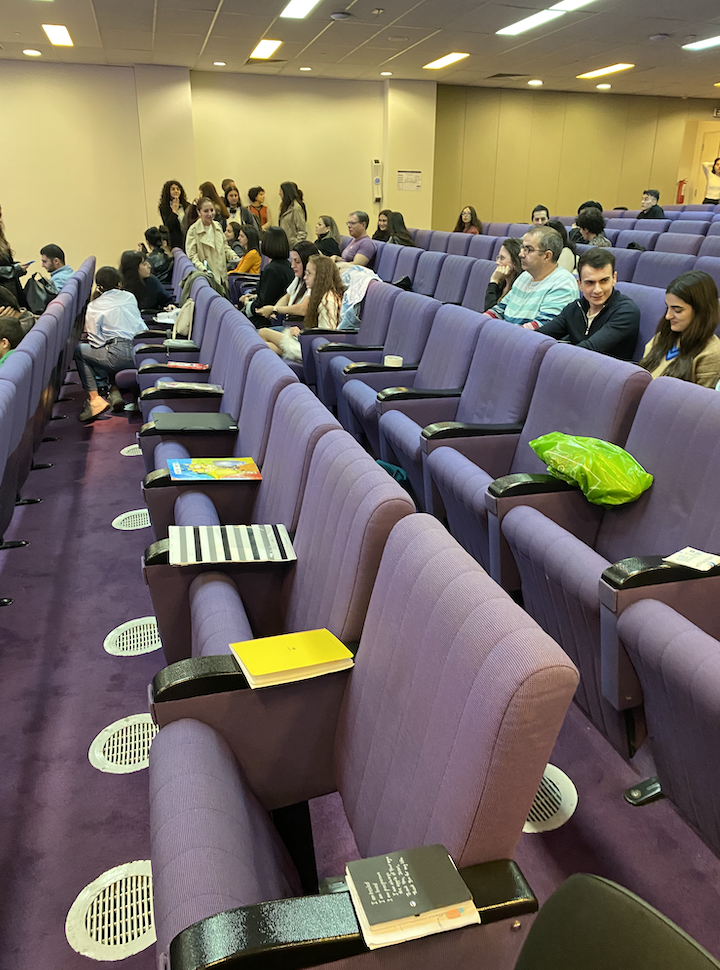
At the ceremony, it felt a bit like a red carpet thing… The first two rows were reserved for our class (👀) and some VIPs. I saved a ton of seats for my family and Filipino and Armenian friends.
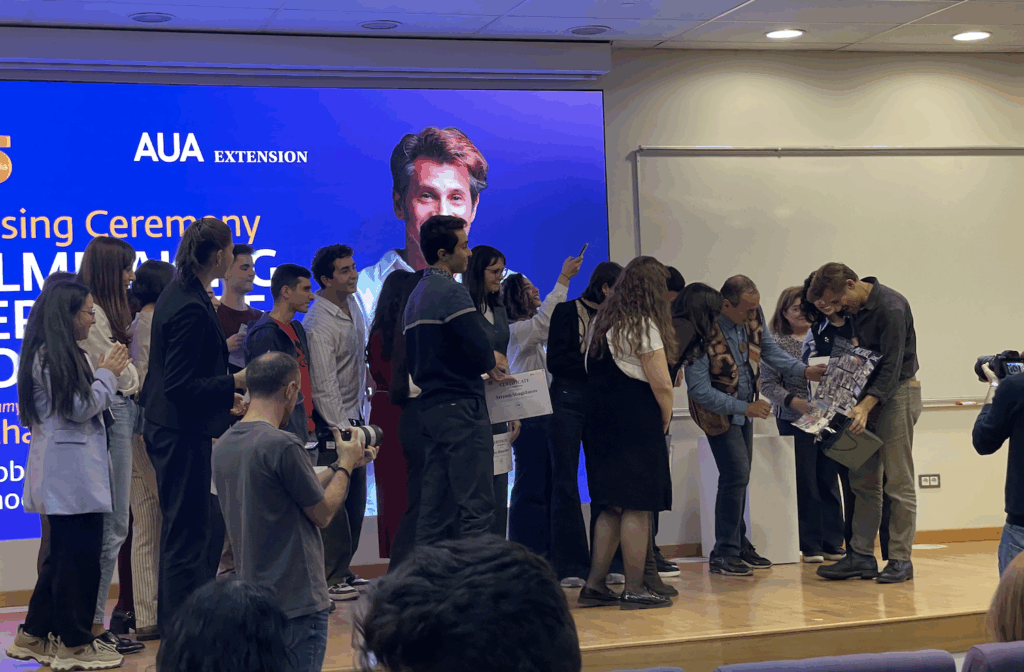
We had a few speeches from the Provost, an AUA Extension representative (as our workshop was held under that branch of AUA), and Michael Goorjian. Several weeks before, my friends were fretting how we only had a couple weeks to make a film. But Michael’s speech put it all into perspective – like, his whole point was for us to make something, together. Imma just quote him here:
“Two weeks ago, there was nothing. I mean, blank-page nothing. These kids, these guys (yeah, I call ‘em kids) wrote, directed, edited… I mean one of the films was shooting this morning. And that’s how… like, we just did it. And that was the point of the course. As someone who was privileged enough to make a lot of independent films, to me – filmmaking… there’s a lot of barriers, you gotta raise a lot of money, there’s a lot of this, this, this… When you just get out and do it, you realize- like, we had no money…! But we just grabbed friends and we just made these.”
Cue the films, which you can watch here (all under the theme “Four Phases of Love” – taking letters from the types: phileo, agape, storge, and eros 🤯):
The experience of our work being shown to a packed theatre was nail-biting. Ours was the third film and I was just grabbing the hands of my teammates sitting beside me and listening to the reactions of the audience to our film. Our class felt like one big family at that point, and it was wonderful.
After the certificate awarding ceremony, we got to give our poster to Michael and took a group picture with it.
When my family went home, we ate some lahmajo (the eastern Armenian spelling) 😄
Two weeks earlier there had been nothing. Blank-page nothing.
And now… we’ve got four short films. We built a new family of filmmakers that transcends generations, cultures, and distance.
And, we proved that, if you just grab some friends and start shooting… you can actually make something that nourishes the soul.