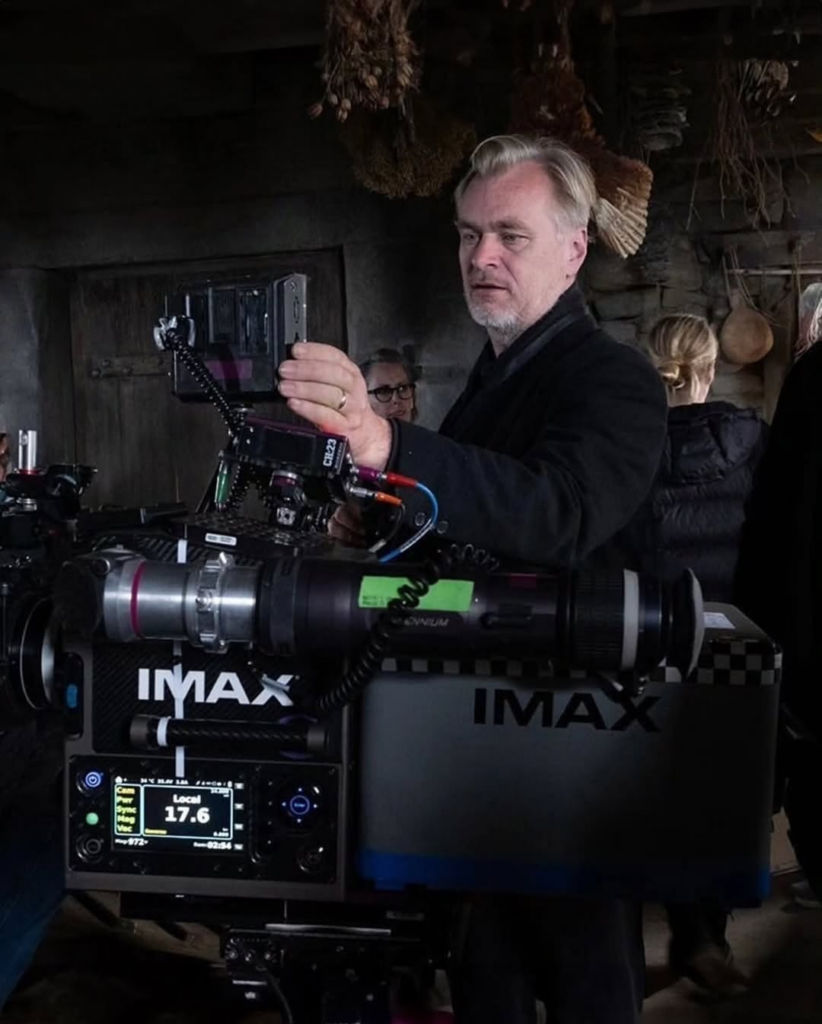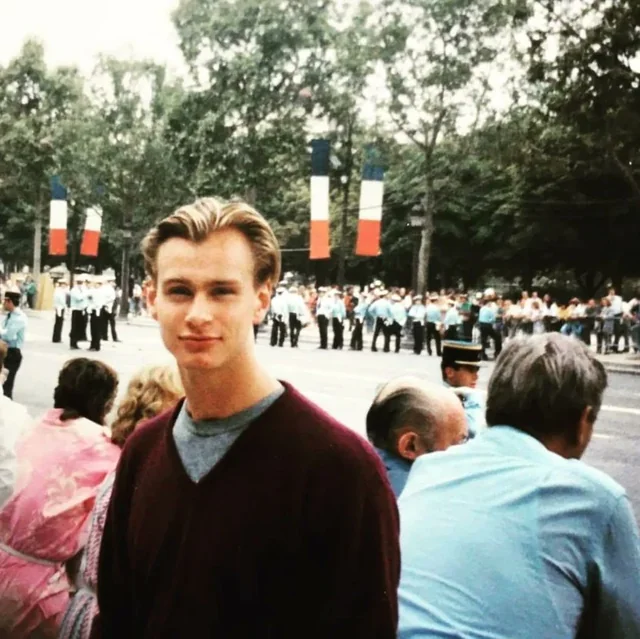
If you’ve been following this blog, then you know that probably half of my posts are Christopher Nolan-related. To be fair, I did open this blog just as I started film school and got into my Nolan phase, so it’s a natural consequence. But why did I become so obsessed with this guy?

Part of the reason is because I related to him as a third culture kid. Yeah, we all know him as guy who made the Batman Dark Knight trilogy; the one who helmed Oppenheimer, Interstellar, and more recently the Odyssey… But let me offer a deeply personal take: he’s a third culture kid director.
Firstly, if you’re not aware about the term, a third culture kid (TCK) is someone who grew up outside their passport country or culture, or, as the academic definition goes, “[an individual] who has spent a significant part of their formative years living in a culture different from their parents’ homeland and their birthplace. This experience often leads TCKs to develop a unique identity that blends elements from their birth culture and the various cultures they encounter during their upbringing. TCKs typically come from families that move due to international work, military assignments, or other global circumstances, which can include transnational marriages.” (Harmon). And, as Pollock & Van Reken write, they ‘interact with many cultures but do not have “full ownership in any.”’
I grew up in three countries (the Philippines – my birth country; then Nepal and Armenia) – I’m sure some of the people reading this might relate. I also did research in TCK and diaspora studies for my bachelor’s thesis. Then, I encountered Chris’s story in graduate film school (we were assigned a 4-hour documentary on his life and work for Basics of Directing class) and found out his mother is American and father was British.
He grew up both in London and in Evanston, Illinois (where one of my good friends from uni is from – it’s where Home Alone was shot!), moving back-and-forth. One of the first really interesting things that I learned about him was that he and his brother have completely different accents (despite their parents staying together all those years). They just happen to have grown up on two different sides of the Atlantic. It’s kind of like Parent Trap where Chris has a very British accent, while his brother Jonathan Nolan (or Jonah, as Chris calls him) – who co-wrote The Dark Knight and Interstellar – has an American accent, (a very Midwestern one lol). If you want to hear how different their accents are – check this out:
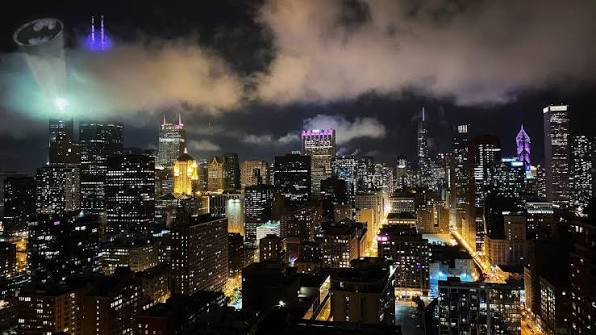
The Nolan commentary I watched for homework also mentioned that, instead of using New York as an inspiration for Gotham (which has been the tradition), he used Chicago, his mother’s city.
Even with all these facts, I had my doubts and wasn’t really sure if I could call him a TCK. This is because I’ve met people before who didn’t want to be defined as a diasporan or TCK. They either rejected the idea or it was something too sensitive for them to talk about. And watching Nolan’s interviews, I got the impression that he seemed pretty secure in his British identity.

But the same time I got into his work, I was going through an identity crisis as a TCK myself, so I couldn’t help but relate strongly through his films, which I started to watch and rewatch after that fateful Basics of Directing class. His films gave me language for what I was going through. And I was reading deeper into his background and thinking, possibly, he was a real TCK.
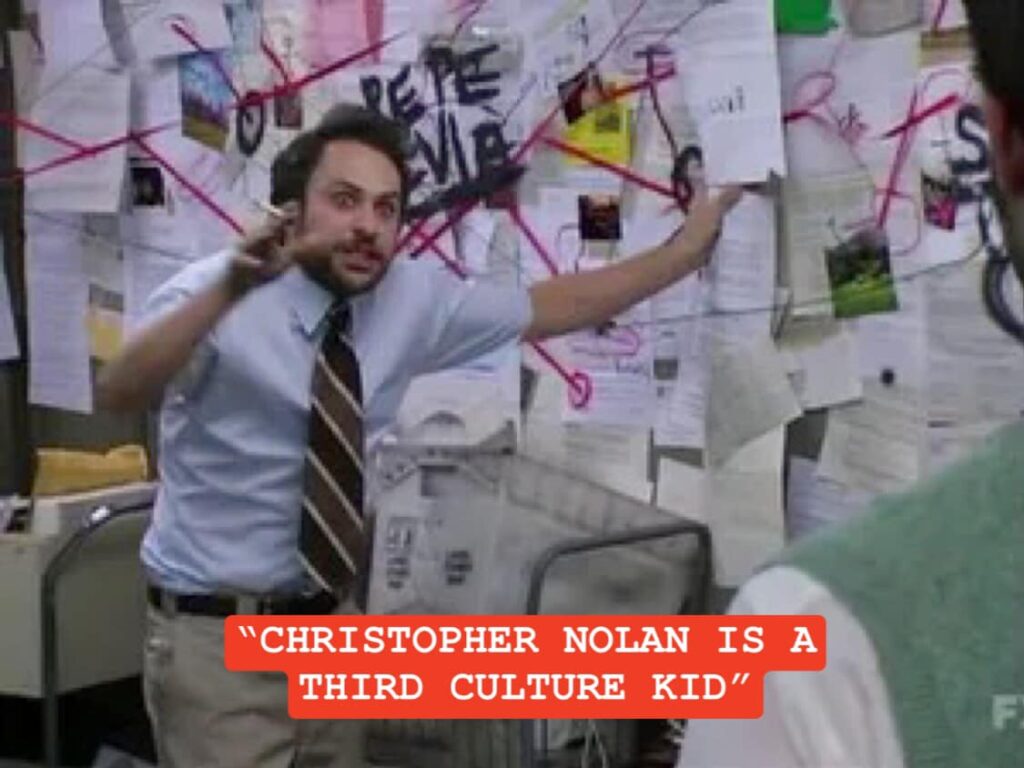
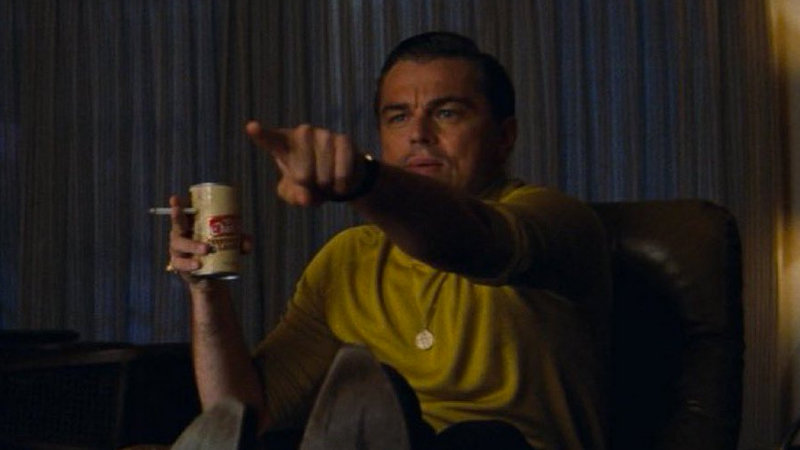
I was pretty much that guy in the previous meme as I went through Dunkirk, Tenet, and Memento… until April last year, when I started reading his biography, “The Nolan Variations” by Tom Shone (I read the ebook for a different reason – I wanted to know how he came to success as a director so I could follow his example 😆). Here are some of Nolan’s quotes:
“I loved being in England … I loved how different it was from America, I thrived on the back-and-forth, the change of gears, but I’d come home and the adjustment could be a little tricky. You feel glad to be home, you get to resume some friendships, but your school friends are all in different parts of the world; everyone has moved on.”
Regarding himself and his brother:
“When they meet us people are often surprised that Jonah has a completely American accent and I don’t. It’s something you have to figure out when you’re a kid. You have to make a decision: How am I going to speak for the rest of my life? Being of two countries and two cultures, I think you wind up being naturally self-conscious about that. There was a certain amount of discombobulation. I sometimes felt a little like an outsider on both continents.”
THAT LAST SENTENCE. (There’s also an interview where Jonah describes himself in high school as a dorky kid with an English accent: “I tried as fast as I could to get rid of it. … At one point my dad threatened to send me back to England for high school – ‘You go to Catholic school or you’re going to England’ – and I was like, ‘I am not going back to England. I am not doing this all over again.’” 😭)
I can relate to having to choose how to speak: while Chris’s dilemma was about which accent to use while speaking English, for me, it’s which languages to use. For more than half of my life, I’ve had to use English over Tagalog because I live outside the Philippines, and being in Armenia, my close friends all speak English.
I recently called my grandmas in the Philippines, and I automatically spoke in English to them – which they perfectly understand, but I realized I should speak Tagalog because it’s more Filipino (even though their mother tongue is Masbateño, but I barely know how to speak it). So I struggled to translate phrases in my head into Tagalog while talking to them. Guys, I felt like an impostor 😭 (To the Filipinos back home who do this: please don’t laugh at balikbayan kids who can’t speak Filipino. Just teach them Filipino words – they should appreciate it! ☺️)
So I totally get why Chris says he feels like an outsider in his own countries. There was also this really bittersweet part in his biography:
“I was told when I was a child that I would have to decide when I turned eighteen whether to have British citizenship or American citizenship. Fortunately, the law changed by the time I turned eighteen, so I could be both, but when I was a kid, my parents let me know that I was going to have to figure out which to be. And fortunately, I didn’t have to make that choice; it would have been impossible. So, I’ve never taken those kinds of things for granted.“
Man, that’s crazy. Imagine having to choose being one or the other.
He also talks about what home is for him right now, and mentions his wife and producer, Emma Thomas – who also fits into the third culture kid description, since she was a diplomat’s child who grew up in Kenya, Brazil, and Jordan (and perhaps that’s why they clicked the first moment they met at uni 🤣).

“I mean for me, home now has been Los Angeles for some years because the kids are in school here, but I get to work in England quite a bit. I have this conversation with Emma a lot because she misses England, and I don’t miss it because I know that I can go back, and don’t miss America when I go to England, for the same reason. … I really enjoy going to different places; I enjoy that process of refreshing. It’s that change of gears I had growing up. I thrived on that back-and-forth. For me, it’s about switch flipping. You go from one culture, you go to the other, and I’ve always really enjoyed that change. I always found it invigorating.”
There you have it: the pros and cons of the TCK experience – the grief of leaving and of friends moving on, but also the thrill of being able to wear two cultural shoes and traveling with them at the same time.
At the start of 2024 (before I went to film school for my master’s), my mom was watching Past Lives, directed by Celine Song, on the airplane back from Manila to Armenia (we spent Christmas in the Philippines). Somehow, the title resonated with me.
I couldn’t stop thinking about it, even though we didn’t finish the movie, because I was thinking of my own past lives: being an eight-year-old in Manila living a very Filipino life – playing patintero with the neighborhood kids and riding the tricycle back home from soccer practice (as a former U.S. colony, yes, Pinoys called it soccer), waking up to “Tahooo!” and eating the soya-pearl with dark sugary “sauce” for breakfast… and then as a preteen and teenager in Nepal dressing up in kurtas, dancing to Bollywood songs, eating momos and chicken curry every week… and in Armenia where I would yell, “Vay!” when I’m annoyed, eat matsun as my midnight snack, and where I cried over my university-mates who died in the 2020 war and remembering my classmate by visiting his grave, something every Armenian here has done for someone they lost…



It’s hard for me to talk about these three identities that I’ve had. It’s like I have three children, and none of them is my favorite. And for most of 2024 and after, I grappled with that idea of those fractured selves, my past lives – and the grief of saying goodbye to them.
The first year I moved to Nepal with my family (I was 10), I was very homesick for the Philippines, until I slowly fell in love with Nepal and, a year later, fully accepted our new lives there. So it was very difficult for me to leave Nepal for Armenia, which happened so fast. And it took a long, long time to understand and process the grief of what happened.
For my bachelor’s thesis, I created a 43-page graphic novel about seven Armenian diasporans who were also grappling with their identity. They shared stories of being discriminated against in their own homeland, struggling with the language barrier (since some of them didn’t grow up speaking Armenian or spoke a different dialect), and doubting whether they were Armenian enough.
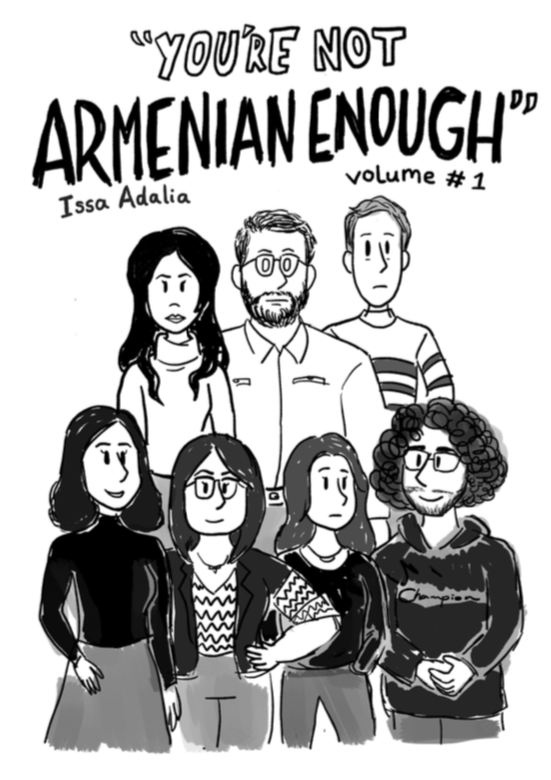

This made me face questions about my own identity and where I belong. It also struck my unaddressed grief of living in different countries.
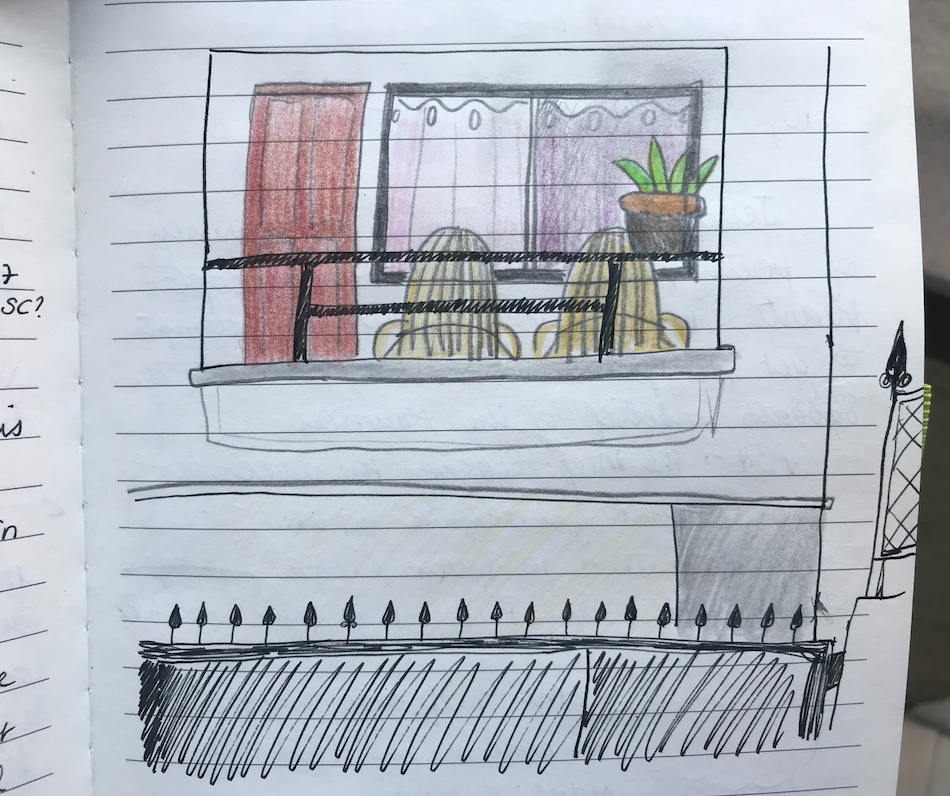
This led me to draw my favorite places in Nepal. I drew the balcony where I used to read the Bible and listen to the birds, the mynas, the parakeets, the oriental magpie robins; the crows arguing, and the pigeons waking me up in the morning.
Also, I had recurring dreams where I had a Frankenstein monster of a house: I would be in my kitchen in Manila one moment and in my Nepal house’s garage the next, and when I walk outside, I’m in Armenia – something like that. Here’s part of a comic I drafted to try and explain this better:
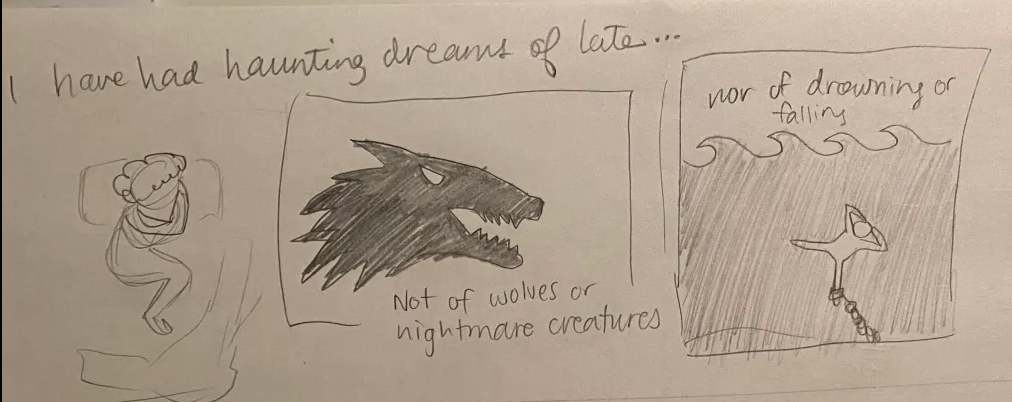
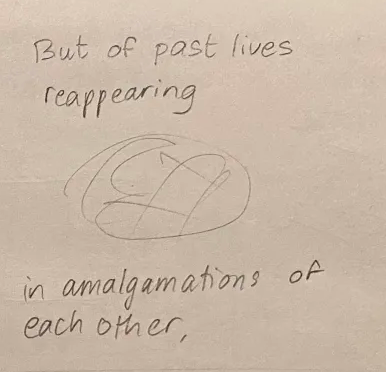
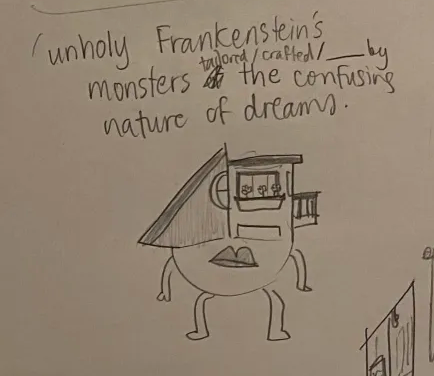
In those dreams, I always have a mission – as simple as trying to cook something in that old Manila kitchen, or relaying a message to a friend. But the dream changes so fast that I don’t have time to complete it. And when I would wake up and remember those dreams, I would always feel bewildered, confused, and sad. I wouldn’t exactly call them nightmares because I didn’t panic or feel afraid – it was more of a dull, numbing sense of fear of being lost: maybe being lost in the past, or in that confusing jumble of places. (Sounds Nolanesque, doesn’t it?) I don’t know when those dreams began, but they began to bother me so much that year that I started asking, Why is this happening? I would pray and ask God what they meant.
And so in November of that year, I decided to watch Inception. It was simply a decision because I heard it was an important film to watch. I almost watched it on one of the flights back from the Philippines that year, but for some reason, I didn’t continue. So it was timely that I did finally watch it when I was wrestling with my dreams, which is something the protagonist of the film does.
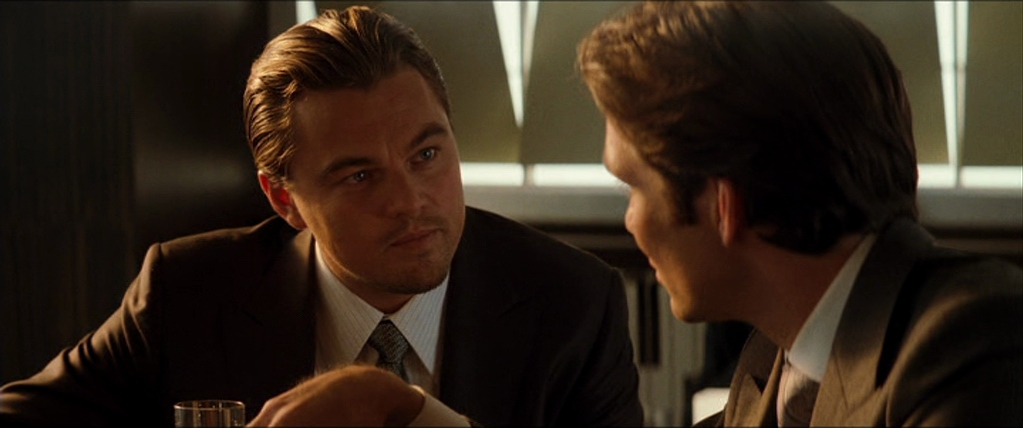
In the film, Leonardo DiCaprio’s Cobb is a freelancer who is hired by people to steal things (like trade secrets and business plans) from other people’s dreams. He has a contraption that allows him and a team to do so – they go on dream-heists. But then – he keeps being held back from his missions inside the dreams by the appearance of his dead wife.
It was just like how my Frankenstein monster dreams would disrupt my sleep.
I stopped watching halfway through the film because I had to do something else at home. So, after that, I talked about my quasi-nightmares to an artist friend who’d seen Inception before. I told her I had been praying about this.
After listening to me, she said: “Since God is everywhere, He’s also with you in your dreams, He is still the God of your dreams. And maybe the Lord wants to tell you that… ‘I love you even in your dreams. You can pause any time, and take as long as you need. I will be there and I will love you.’”
When I read that, I almost cried.
A few days later, I finally got to continue watching Inception, and during the part near the ending where Cobb finally lets go of his wife, I just broke down and wept. It helped me let go of some grief I still had about Nepal.
And even though I still continued to have those kinds of Frankenstein dreams, the feeling of loss, the feeling of confusion I had when I woke up – both disappeared. Finally, I had made peace with my dreams.
But I didn’t really have any friends in person who I could both confide in about my TCK crisis and comfort me with some solutions (my TCK friends here were all younger than me and struggling with the same things). Maybe I should’ve asked for help more. But anyways, it’s how I turned to the Nolan movies.
A notable film to me was Dunkirk. It was about English soldiers trying to get home in WWII after losing a battle against the Germans. Watching it, I couldn’t forget how I had gone through a war myself in 2020 – the Armenia-Azerbaijan War, when I was in Yerevan with my family that time – and I had many friends who went off to the army. Seven of my university-mates died, one of them was in my class (I visited his grave a few months before watching Dunkirk).
But what got me most about the film was the line from Kenneth Branagh’s character, Commander Bolton. For context: the British are waiting for rescue on the Dunkirk beach, and since their military does not have the capacity to save those hundreds of thousands of soldiers, they mobilized the civilians who are setting out across the channel in their own boats.
Commander Bolton is standing on the wharf at Dunkirk, watching the horizon, desperate that there are so few ships ashore to rescue his men. Then he sees something in the distance. One of his soldiers gives him binoculars. Moments later, he sees tiny boats out in the distance – the civilians coming to get them. Then his soldier asks, “What do you see?”
He answers, “Home.”
It moved me to tears because I wished that the same would happen to me. One of the third culture kid maladies is that we sometimes don’t feel welcome when we go back home. Or, even though we are welcomed by some people in very loving ways, the the experience of being ignored or rejected by other people we expect would welcome us – but don’t – hurts even more because we’re going there to find a safe place; we’re trying to recover the home we lost – but then it never works out how we want it to be.
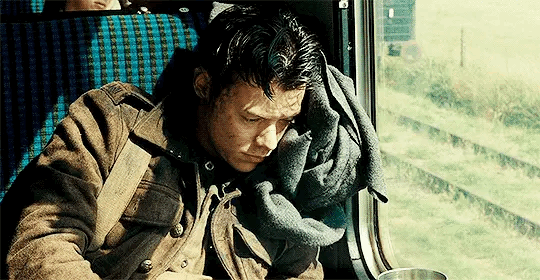
There’s also that ending scene when Harry Styles and the other soldiers come back home on the train and the people outside are just angry at them for losing the battle. They have no idea about the horrifying things those kids went through. And I get that sometimes, how people back home simply cannot understand the difficulties we go through because they’ve not been in the field with us.
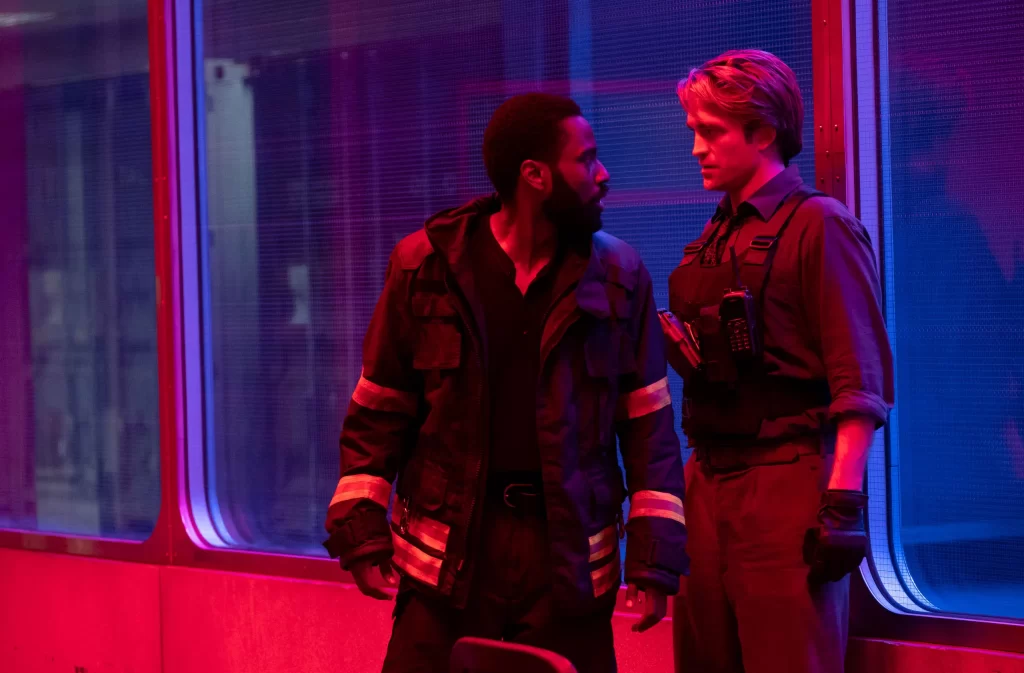
There’s a similar scene in Tenet, Nolan’s 2020 film, which talks about a different aspect of reverse culture shock. For context to those who haven’t seen it: there’s a large device called a turnstile, which is kind of a time-travel machine, except, once you pass through it, you go backwards through time – the laws of physics are reversed or something like that. Everything in the natural world is going backwards to you if you pass through – you are an aberration in time.
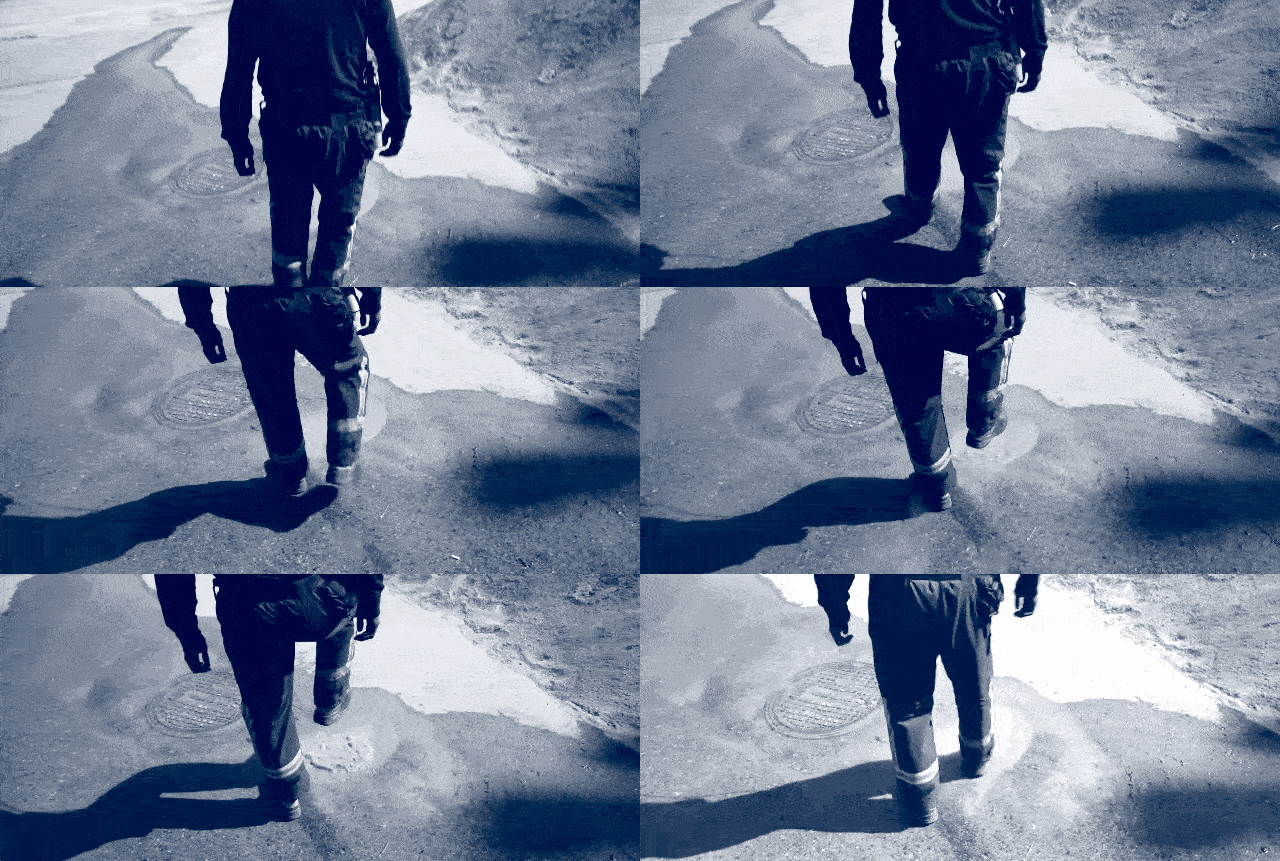
The first time The Protagonist uses the turnstile, he’s in a bit of shock. He sees the world inverted: seagulls flying in reverse, smoke billowing in the sky in reverse, stepping on a puddle and the water reacts in reverse…
There was a time when I was a teenager, it was probably my first or second day back home in the Philippines after being in Nepal (we went back once a year) I was in a fast food restaurant and everyone around me was talking in Filipino. Suddenly, I had sort of a mental overload – I could finally understand what everyone was saying. It’s like that episode in a superhero TV show, No Ordinary Family, where the daughter suddenly gets telepathic abilities. She tells her mom that she’s so overwhelmed because she can hear everybody’s thoughts at the same time. So her mom takes her up on a Ferris wheel where she can get away from it all.
I just felt like her at that moment. It took a while for me to get used to hearing Filipino, everywhere, again. So I could imagine the Protagonist being pretty overwhelmed by the reverse world. Actually it wasn’t reverse culture shock – it was reverse world shock 🤣 But he got over it quickly and was able to drive a car right away. BRUH. plot armor…

I also saw Batman Begins – which I like more than The Dark Knight because it prioritizes the theme of Bruce Wayne juggling his different identities. His conscience, embodied in Rachel, keeps on bugging him about who he should be.
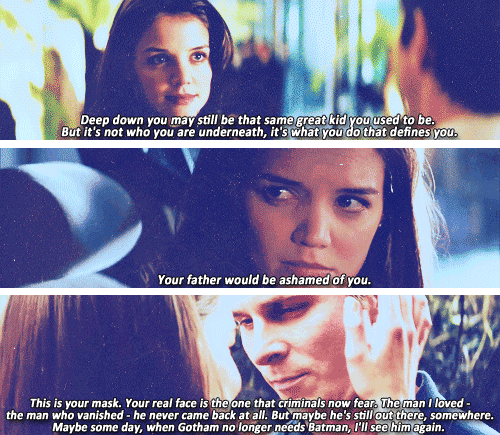
I like that dilemma about how he had two identities becoming more of the other – like the Batman persona bleeding into his Bruce Wayne identity. I find myself adjusting subconsciously to everyone I meet, which means sometimes repressing some aspect of my Filipino identity.
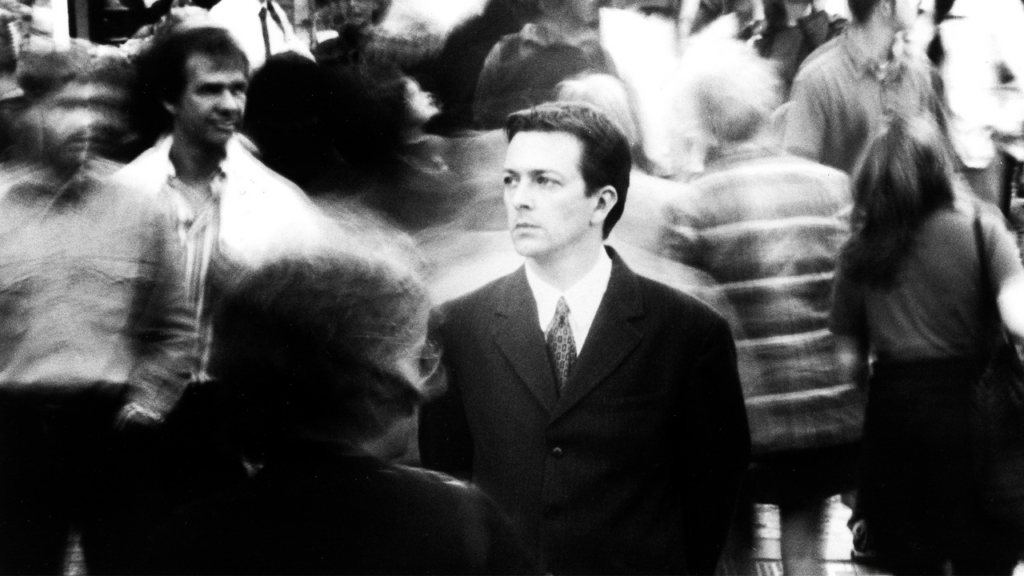
Chris Nolan‘s first film Following also deals with the preciousness of memory. I know a lot of people who collect things from different places they’ve moved to, and they hold on to memory. This reminds me of a friend who’s a child of diplomats – an Armenian born in India, who grew up in America, China, and Belgium, with some years spent in Armenia. He told me he’s scared to build deep friendships because he knows he would have to leave anyway.

All of these films utilize nonlinear timelines, a Nolan trademark. In my experience, they don’t bother me because I’m already used to encountering a lot of confusion as a TCK 🤣 it’s a survival mechanism to make sense of culture clashes – even minor ones – so we can act in culturally-appropriate ways. I talked to an Armenian friend who grew up in Turkmenistan and he said he also likes nonlinear timelines in film 😆So I would hypothesize that Nolan’s fluency with nonlinear timelines is not just his genius, but also the experience of navigating a multicultural world. (I mean, he must’ve had experience calculating the time difference to call relatives across the pond, like how I calculate the best time to call my grandmas and friends in the Philippines 😅)

I also wondered why his films showed such a nuanced understanding of grief. As you have read, grief is a deep part of the third culture kid journey. But, apart from that, I couldn’t help thinking, “This guy went through something!”
And there’s also him mentioning this phrase in interviews, twenty years apart – first during Batman Begins in 2006 and recently for The Odyssey this year: “I make every film like it’s the last one. I don’t know if tomorrow I’ll get hit by a bus or something, so it’s important to us to give it all we’ve got.”
Later, I found out through a friend – a fellow Nolan fan – about a film project the teenage Chris Nolan went on with his friend, Roko Belic (a son of Hungarian immigrants in Chicago – there’s the TCK connection again), in Africa. Along with other teenagers, they raised money for relief aid in Kenya, Tanzania and Malawi – with Chris and Roko filming the journey. The trip was led by Dan Eldon, who was Chris’s age and had a similar background (British dad, American mom, but grew up in Kenya).
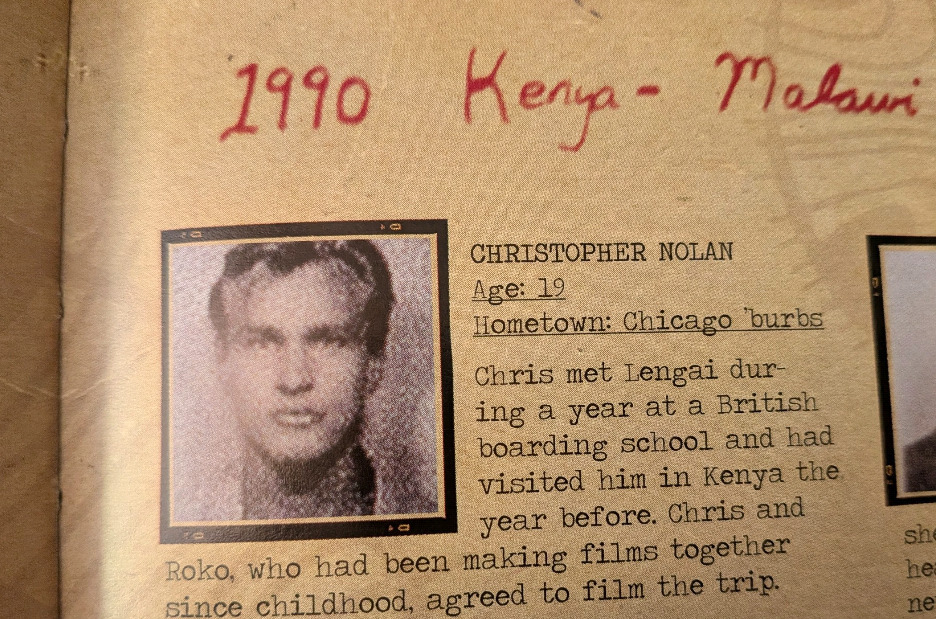
It was something I could relate to as a teenage relief volunteer following the magnitude 7.8 earthquake in Nepal in 2015. You get to serve people who are in a situation that’s way worse than yours and it puts things in perspective.
Later on, Dan became a Reuters journalist in Somalia. There, he was sadly killed during a raid. He was only 22.
And so I figured out why Chris says, “I make every film like it’s the last one.”
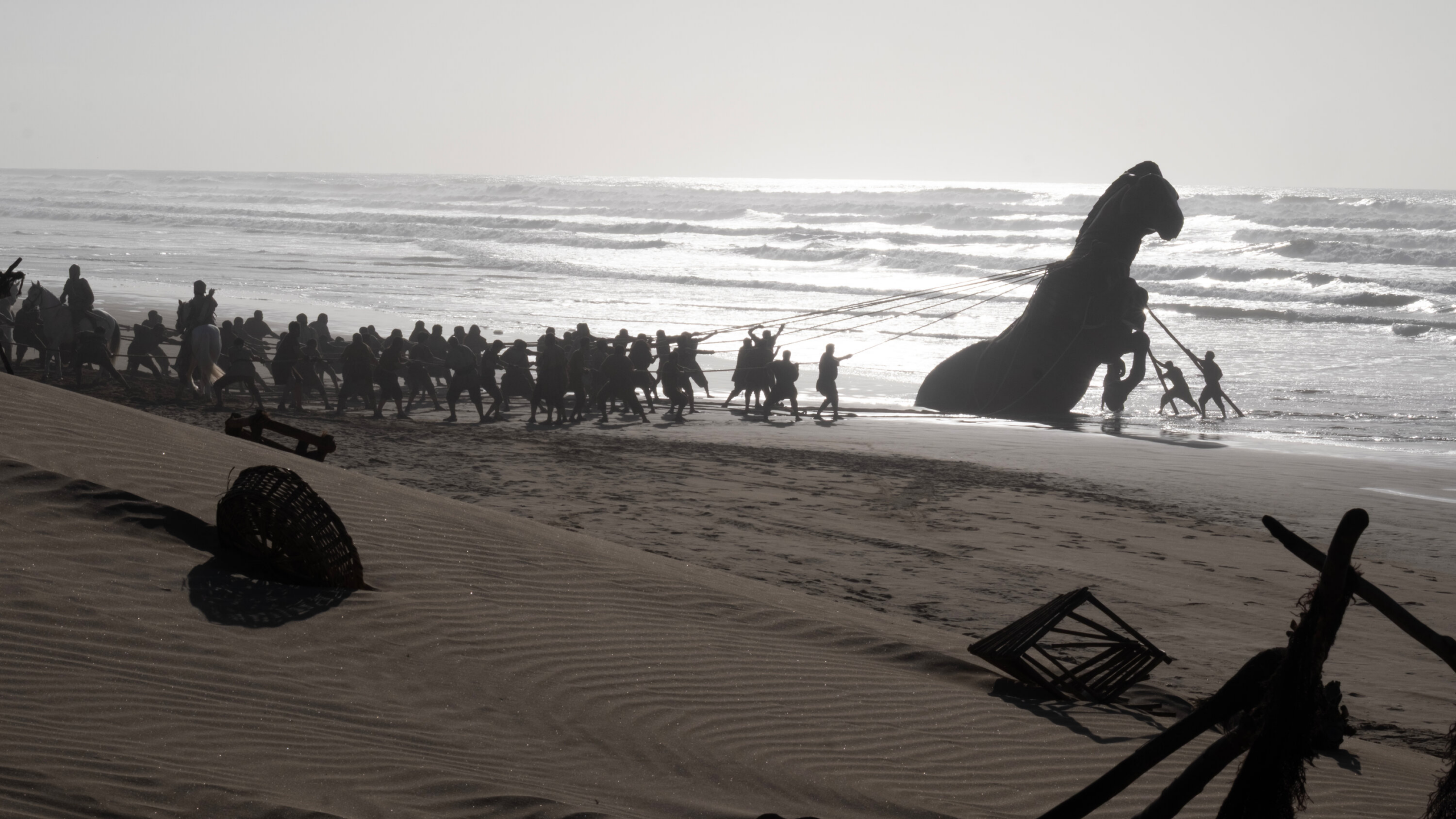
Tomorrow I’m going to see The Odyssey on its premiere day here in Armenia. Since it’s about a man trying to get home, it’s nice to hear Chris Nolan saying in interviews that the Odyssey is “the combination of all my stories,” and all of them have been riffing off of it essentially. So I’m excited to see if this film could fit everything I’ve been through with Nolan’s work in a nutshell.
Side note: Emma Thomas also addressed a bunch of TCKs – children of U.S. military families stationed in Italy, where the Odyssey was shot – at a special Q&A. She related to them because of her upbringing and she said, “I want to thank you for everything that you guys do to support your parents.” One of the kids said her thank-you meant a lot because “it can be tough, admittedly, sometimes.” Guys, I’ve been yapping about Chris Nolan being a TCK director on Reddit and the Odyssey Discord server but no one understood me. To be indirectly acknowledged by HIS WIFE HERSELF made me feel so seen 🤣 (and as a TCK myself 😭).
I didn’t grow up reading Homer’s Odyssey, so I first tried to read The Iliad, then jumped into an adaptation of the Odyssey that my friends in the Philippines were crazy about – Jorge Rivera-Herrans’ “EPIC: The Musical”.

What hit me most was the final song, where he is finally reunited with his wife Penelope and he asks, “I am not the man you fell in love with. Would you fall in love with me again – if you knew all I’ve done? The things I cannot change – would you love me all the same?”
It could be my song – my question – to my homeland. “Would you fall in love with me again?”
When I was in the Philippines that summer, we went to our province where my parents grew up. We went out to the sea and had to take a boat to get to the sandbar. Later in the afternoon, as we took the boat back to the station we’d embarked from, I was thinking of the Odyssey story, and how I still felt out of place in my own homeland. When the pilot had turned the motor off and the boat was slicing forward through the waters smoothly to the station, I heard a voice saying, “Odysseus will find his home.”
I felt that was for me, too, and tears came to my eyes.

Now I’m looking forward to seeing Nolan’s Odyssey because I sense I will be coming full circle. God has already healed me of so many things I’ve been wrestling with the past few years through Nolan’s films (I mentioned this in my other article about Interstellar), and I believe that that the Odyssey – no matter how it’s going to go – will provide some sort of closure for me.
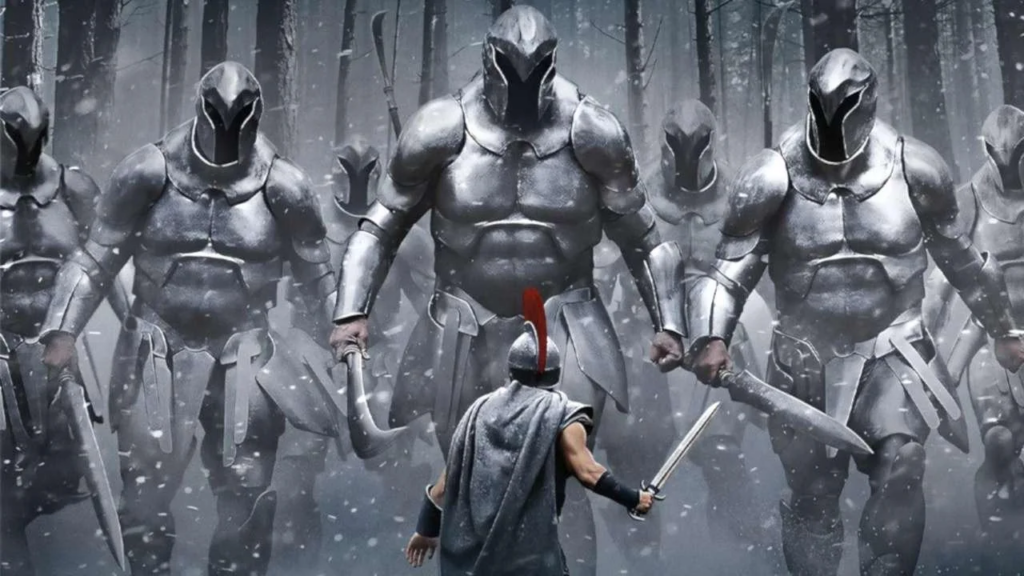
Somehow, I think things got worse for me after I owned the TCK title, because I finally named the things I struggled with growing up. But I think it was high time to face those giants.
And God reminded me of my true identity in Him, put poignantly in 1 Peter 2:10 –
Once you were not a people, but now you are the people of God; once you had not received mercy, but now you have received mercy.
Before, I thought, “If I am not fully part of the peoples I tried to belong to – the Filipinos, the Nepalis, the Armenians – then who am I?” It was like when Chris said “I felt like an outsider on both continents,” – even though he belonged to them by blood!
But it’s a lie that I’m nobody “on both continents,” as I sometimes believed in my loneliness. Now I believe God has fashioned my true identity and it supersedes every label I or others could put on myself. He has loved me with an everlasting love. Before the foundations of the earth were laid, he called me by name and he chose me.
And I just realize now that the verse speaks about a community — Peter addresses the plural you. I’m not alone in this redeemed identity.
So maybe one day I’ll make films that do what Nolan’s have done for me – ones that assuage grief, celebrate our chameleon selves, and edge us closer to home. ♦