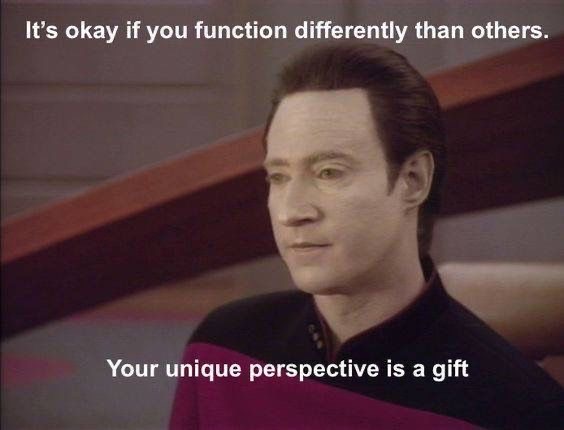
An android who couldn’t feel emotions taught me how to stop overthinking mine.
It started at a university workshop on perfectionism several years ago, where I was taught to recognize the specific ways it’s been damaging me and that I needed to put a stop to certain mindsets and behaviors I had. Part of what the counselor said is that perfectionism is about setting unrealistic expectations on yourself, and it’s also being too obsessed with order. It can sometimes be helpful if you’re aiming for excellence, but too many times, it can go awry. I’m not an extreme perfectionist, but here’s how it looks like (or has looked like) for me:
I do a presentation in class, and afterwards, I list things I didn’t say and wish I said. (I used to get hung up on it a lot.) I procrastinate writing an email for so long because I’m worried about writing it perfectly or about what the recipient would think about me, that I either don’t send it or I send it at a bad time. (Even “bad time” is relative – sometimes it’s just me who thinks it’s bad 😂.) I have a conversation with someone new, or about something controversial, and I stay up at night thinking about what I could’ve said, and it takes an hour or so for me to get to sleep (this has almost never happened for the past several years, thankfully).
I ask a question in class and I feel self-conscious. Or I don’t ask a question I really want to ask in class (or make a comment instead) because I worry what my classmates/professor might think about me, and after the end of class, I regret not saying it. (It’s hard to get out of that headspace of not speaking up, too, so I have to really do something else to get myself thinking about something else, like listening to a podcast.)
I’m even thinking of opening the counselor’s email from four years ago where she sent us her slides about perfectionism to get the exact definition of it, or get the examples of perfectionism she shared, because they might be better than my own examples. But – I won’t. Anyways, I think you get the point.

For social anxiety – which I think a lot of young people struggle with nowadays, here’s how it looks like for me (though it may be a bit different because I live as a foreigner in a different country.)
I don’t like going to the store to buy eggs and speaking in Armenian because I’ll get the grammar wrong or people might judge me. (I hear my dad’s voice saying, Just learn it and practice it!!) Or I always think thrice before I send a message in my Master’s group chat because all my other classmates are Polish and I haven’t gauged their culture (I had only visited Poland for a short time last year and I haven’t met my classmates IRL because our courses have been online so far). Or I often have this vague fear that people would see me as awkward – even though I had this realization in the past that most people don’t care how I (or another individual) acts because they’re mainly concerned about their own selves – what they’re gonna eat for lunch, how they will get home or to their next meeting later, etc.
After I graduated university, one way my anxiety manifested was when I’d be back on campus for some events, and I’d randomly meet certain friends or professors. Illogically, I had a hard time thinking what to say to them, or how to carry on the conversation, because I thought, “I’m not part of their community anymore – at least, the same way I was back when I was a student.” And I dreaded having to talk to them (crazy, I know).
This kinda bled through the opportunity to have an “office hour” again (a one-on-one consultation with a prof), when I attended the indie filmmaking workshop with Michael Goorjian – I really wanted to get his feedback on a screenplay I’m writing (my friend had already had an office hour with him, so we knew he was up for it), but I was like, it’s been two years since I had an office hour on AUA campus, I don’t know how to act! I mean, another factor was that this dude won an Emmy; he worked for Francis Ford Coppola’s script revision department (🤯) and everything, so I felt intimidated – which was also illogical because he was really approachable and accommodating. Well, I ended up booking the office hour, though I compromised in my anxiety by going to it with a friend, who also brought her own script (since it was on the same day as our film premiere and we didn’t have enough time xD – a half-valid excuse.)
Maybe you can relate with me, or not. Being cognizant of this, I’ve tried a lot of ways to get over perfectionism and anxiety – being aware of unhealthy patterns is the first part, then finding alternative ways to react or unlearn those traits is the second task. Sometimes I forget about this battle.
But, one time last year, I came across this fictional character, Data from Star Trek, whose example became my ideal in reacting to (or counteracting) my perfectionism. He motivated me to do better and made victory look possible.

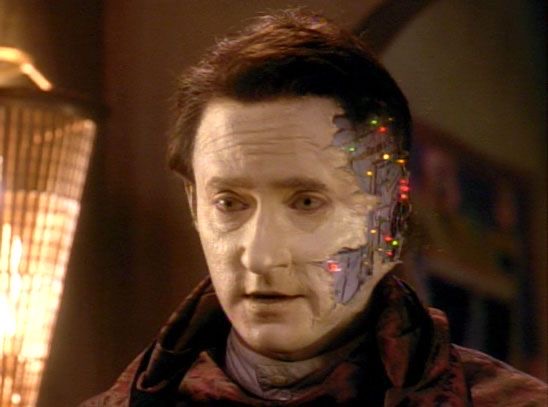
If you’re reading this and you don’t know who Data is, he is a character from the TV show, Star Trek: The Next Generation (the “sequel” show from the 80s that was made after the original series from the 60s – which has Captain Kirk & Spock in it). Data – or, more formally, Lieutenant Commander Data, is an android officer on the USS Enterprise, helmed by Captain Jean-Luc Picard (the facepalm meme guy).
He’s a very smart character: think Chat GPT downloaded into an android – he can answer your most difficult query in a matter of milliseconds – except he’s sentient. And sometimes, he’s inadvertently funny, because he’s learning how to be human.

He cannot use contractions so he always speaks in an odd way. He has a cat named Spot because of his drive to become human.

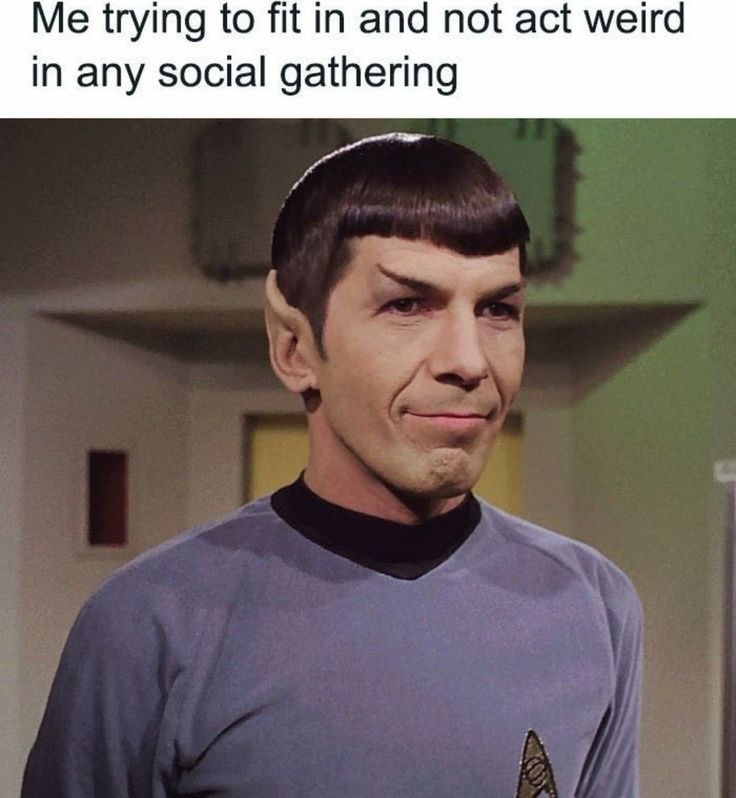
He’s a more empathetic version of Mr. Spock – Spock is more arrogant when dealing with humans – his dad is a Vulcan while his mom is human, but he prides his Vulcan side more. He always asserts that they are more logical than emotional, therefore, less prone to error. On the other hand, Data earnestly wants to understand emotions, even if he’s physically not capable of feeling them, and he’s a more caring person to his crew or different characters they meet.
And because of his desire to be human, he often makes a lot of mistakes when talking to people or acting around people. He keeps telling lame jokes or giving random facts at unhelpful moments.
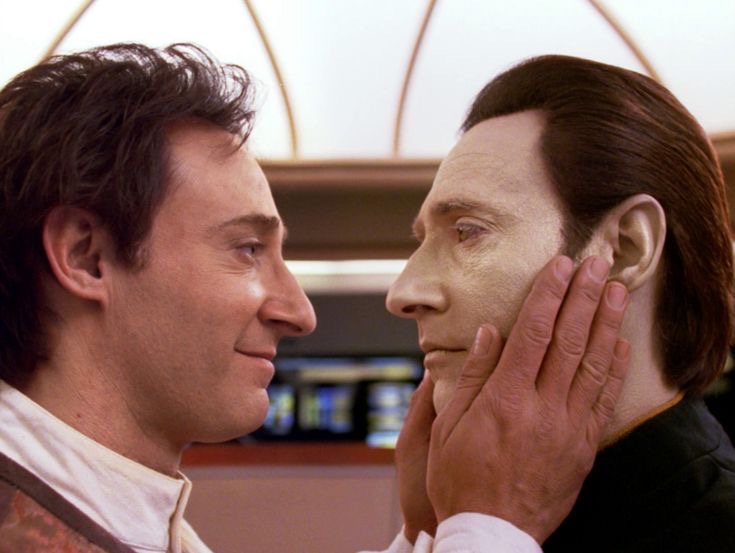
But his curiosity is matched by his great ability to bounce back from his mistakes and social gaffes. He makes that sort of “oh, okay.” face, after someone corrects him – like his best friend Geordi, or Riker (below).

Immediately after, he rights his stature and follows their advice right away, without hesitation or crippling self-criticism.
I came to this realization about him while writing in my journal last year. The following is what I wrote (with phrases in bold that I’ve added just now to emphasize what I was getting at):
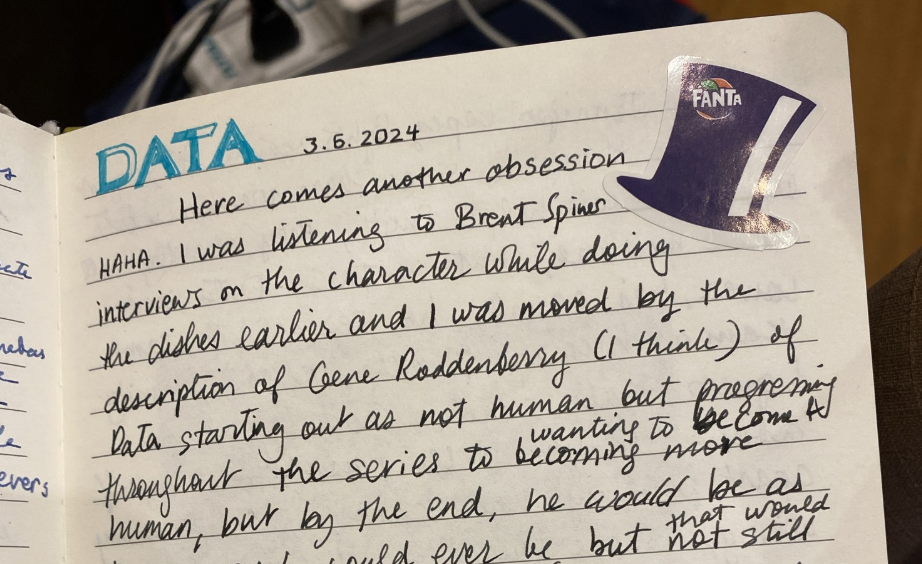
I was listening to Brent Spiner [the actor of Data]’s interviews about the character while doing the dishes, and I was really moved by Gene Roddenberry [creator of Star Trek]’s description of Data starting out as not human but becoming more human over the course of the series. By the end, he could be as human as he could ever be, but not quite fully human enough.
Girl, I could relate to that as a third culture kid (TCK). I guess that’s why I love Data—he learns and learns to be human, but he can’t fully be. Though, we love him for trying. It’s like how I try to be more Armenian, try to learn the languages in countries I visit, and even try to learn the slang in my home country to fit in. But in my heart of hearts, I know I don’t fully belong still. [And I guess my social anxiety mainly stems from my position as a TCK.]
After watching part of the film “Atlas” (Shrugged, jk) where Jennifer Lopez fights against AI, I had this thought, since there are housebots and the mech helper Smith, they pretty much all serve humans.

But in TNG, Data isn’t lower than humans—he’s treated as an equal. He serves on the same team as humans and other races. Dignity. I guess that’s a value God is telling me about. Maybe to see myself (or free myself) apart from my inner critic, to change my wiring, to see myself as His daughter—He wants me not to be in an identity crisis, but to be secured, rooted, and confident like Data.
He’s just a curious person who isn’t crippled by self-doubt or regret. Yes, he’s naïve, but he has got friends who are out for him and want to help him feel and grow in better ways of being human. He treats interactions as problem-solving; trial-and-error. He doesn’t dwell too long on the past—he analyzes his previous actions, realizes where and when he went wrong, then takes steps by always asking people around him what went wrong or what he could do better. [I realize I may be getting too stuck most of the time on that analysis and reflection stage – I can’t easily move on from my mistakes.]
He also takes other conscious steps, like getting a cat and learning from the process of taking care of one, or asking Dr. Crusher to teach him how to dance for Keiko and Miles’ wedding.

Sigh, I have to follow his process more. Well, every new habit is hard at first—the landing is always shaky—but as one keeps at it, there is growth in every step. (Why does Data think Vulcan philosophy is limited??) God, thank you for giving me these new steps forward through my new fave character and fictional crush (lol), because he is an ideal I want to emulate in terms of someone who makes many mistakes but effortlessly pivots with virtually no shame—only eagerness to learn and move forward constantly.
Thank You for teaching—or showing—me this unforced rhythm of grace.
“There is now no condemnation for those who belong to Christ Jesus. And because you belong to him, the power of the life-giving Spirit has freed you from the power of sin that leads to death.”
[Some random ideas I wrote down:]
- Data’s creators
- [The idea of] Belonging to a creator
- Power of the life-giving Spirit = like new programming. Being freed. A new emotion chip = new actions. But the control is by the Spirit who gives life.
Data’s attitude: keep going, keep going. 😊
(Grok actually added that emoji after the last sentence. I asked him to transcribe my journal entry haha. AI can really be sweet xD 💗)
I have a comment about this excerpt from my journal entry: “…he is an ideal I want to emulate in terms of someone who makes many mistakes but effortlessly pivots with virtually no shame—only eagerness to learn and move forward constantly.”
I mean, he has this ability to “effortlessly pivot with no shame” because he’s a robot. Duh! It’s much easier for him.
But I had fun back then, thinking of how I can copy and mimic him. It made it easier for me to row away from my mistakes and crippling self-criticism because I knew Data was able to do it. I mean, he’s incapable of feeling “crippling self-criticism” (the “In Theory” episode proves that 😅).

Anyway, it’s hard to measure how much I improved after I had that Data+perfectionism realization in June 2024. I still struggle with perfectionism and social anxiety (as you saw in my examples), but by writing this post, I see that I have improved.
Of course, I realize I was worked up over stupid things back then – I could’ve spoken the truth to myself, instead of fear; assured myself of my identity in God even more. He has given me a spirit not of fear, but of power, love, and sound mind. I need to meditate on what that means, and to act on it.
This reflection helped me identify my unhelpful and illogical behaviors and motivates me to prayerfully change them, with God’s help and my own practical steps. I need to improve buying eggs in Armenian 😂, and I need to not be intimidated by people I speak to.
And I’m glad I was able to remember what really matters, and how to be secure in my identity. I hope it encourages you too.